
Running a Seongsu Popup Store: How We Plan Summer-Heat Queues and Experience Flow
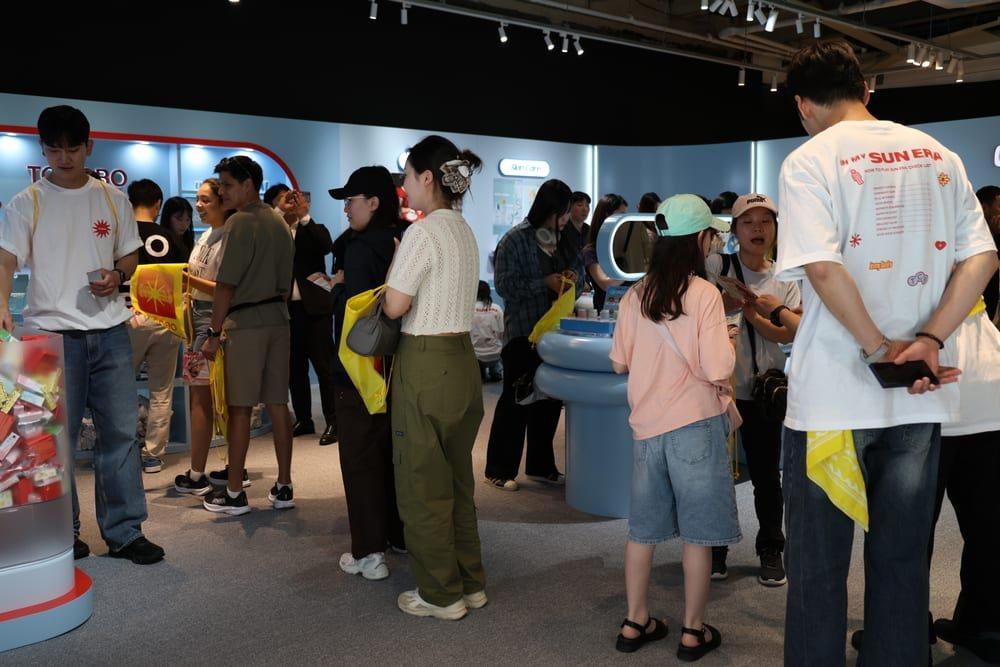
When you take on running a popup store in Seongsu, the ten days after opening weigh on you more than opening day itself. Securing the site and drawing the plans are already done; from the moment the doors open, a different variable comes up every day. The IN MY SUN ERA popup store that TOCOBO held at 65 Yeonmujang-gil, Seongdong-gu, Seoul from May 14 to 31, 2026 was no different. The venue rental and spatial layout had already been settled, and TL CREATIVE handled the on-site operation day by day from opening onward.
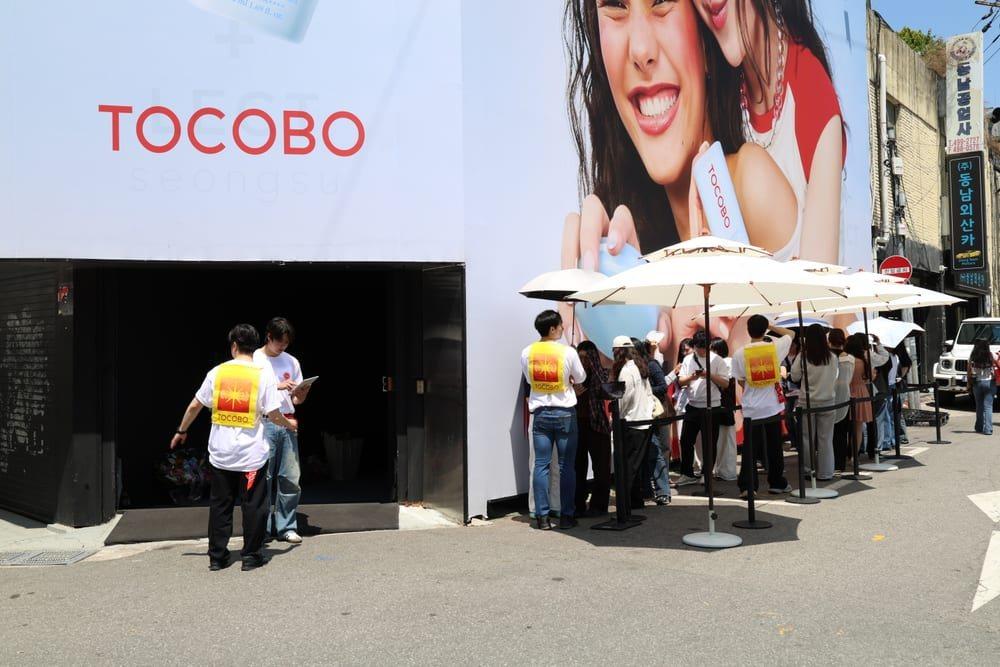
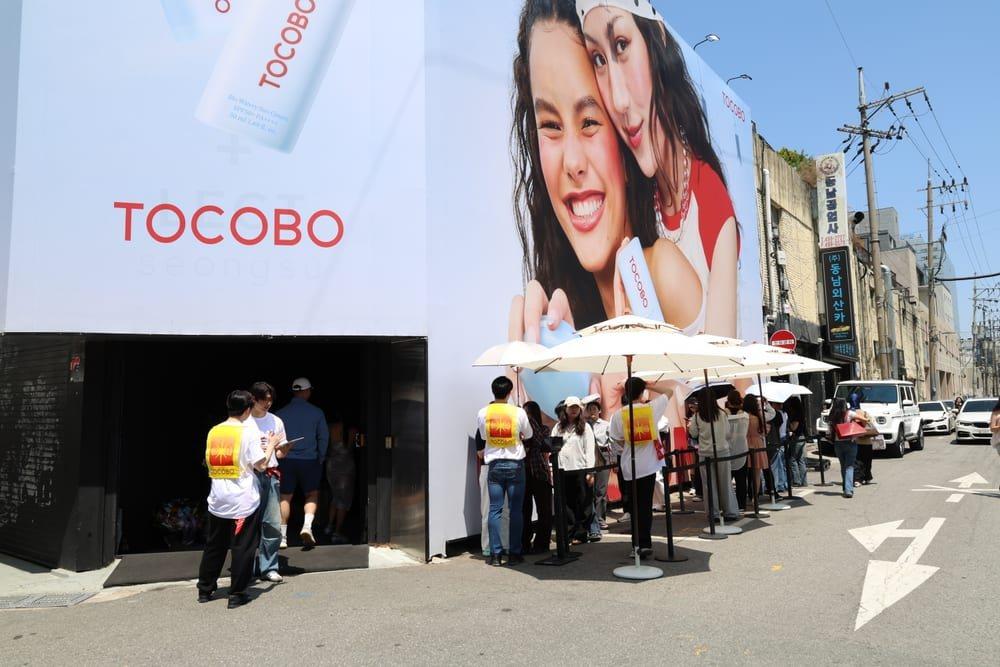
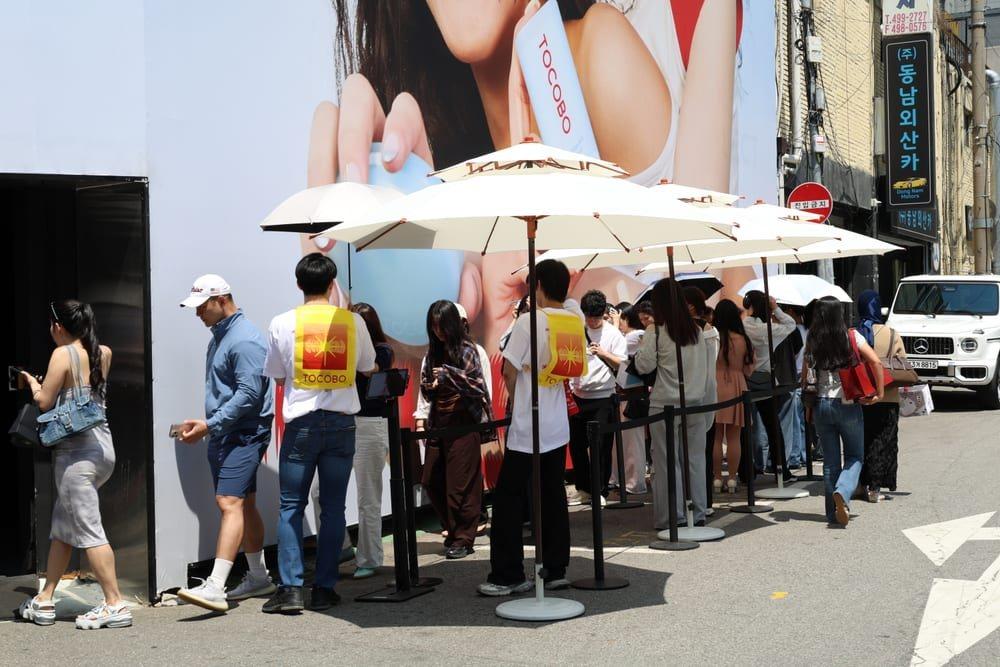
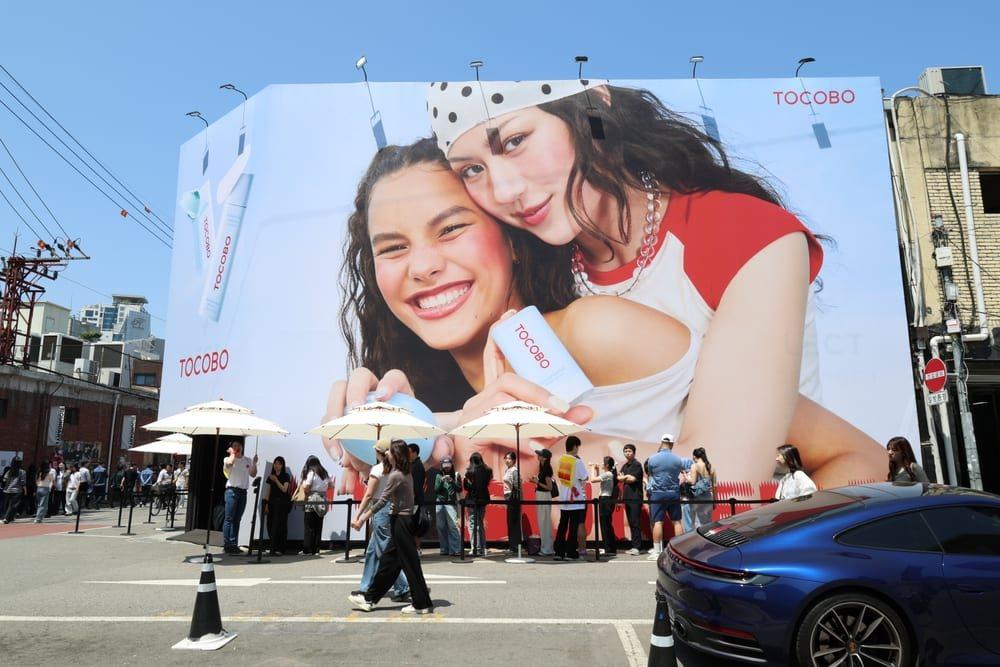
What is the problem with daytime queues? Visitors flock in between 1 p.m. and 4 p.m., when the shade is at its shortest. It was a store featuring new sun-protection products, yet customers had to line up in the blazing sun, a slightly ironic situation that repeated every day. When the queue is hot, it doesn't just increase drop-offs; the frustration built up while waiting carries straight into the experience zone. That is why queue management is the first thing to fix when running a summer street-front popup.
How much shade should you prepare? On site, the baseline is to set up outdoor fixtures like parasols densely along the waiting area. The three rules of shade, water, and rest originally come from heat-safety guidelines for outdoor workers, but they are often applied at popup sites too. That having shade or not makes a big difference in how hot it feels matches what you sense on site. At this popup, too, we placed parasols along the entry and waiting route to cut down the time spent in direct sun.
Why manage the experience zone and the checkout separately? Popup flow is usually laid out as entrance, experience zone, then reward and purchase zone, and the problem is that each of these three sections moves at a different speed. People linger in the experience zone, while the checkout gets sudden rushes. So operations staff need to be assigned to each section separately, watching in real time where bottlenecks form. This popup's flow from experience to reward to purchase was already set, and our role was to deploy staff on site and adjust the queue signals so that the flow would not break down.
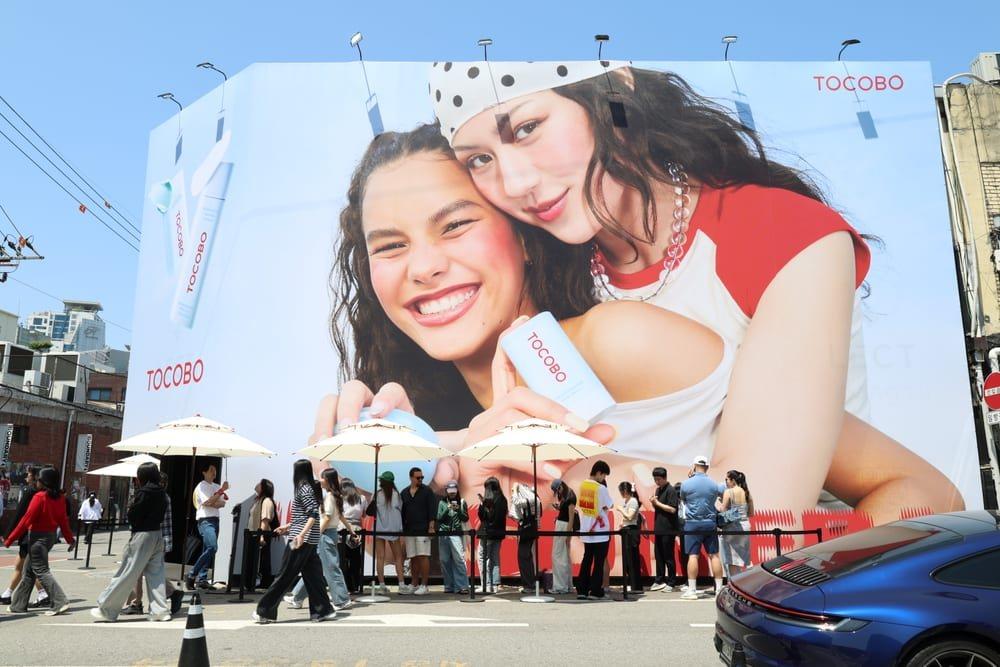
When do operations staff rework the flow? If you only follow the manual, you are bound to get stuck now and then. Patterns where one section backs up at a particular time only become visible after a day or two. Then you make small adjustments: adding staff at that spot, turning the queue direction slightly, or moving the reward pickup point. These fine adjustments can't be seen at the drawing stage and only surface a few days into operation, so the judgment of on-site operations staff plays a fairly large role.
Summer street-front popups start with different consumables. Compared with a winter popup, summer needs a different set of supplies altogether. Iced water, handheld fans, even materials for shade canopies: consumable stock has to be checked every day. Even indoors, if the doors open and close often, the cooling load rises and comfort drops sharply. Since it is a season when people stay longer, it is better to make restroom locations and shaded rest areas more visible than usual. When one consumable runs out you have to improvise on the spot, and in summer, how often you have to improvise is clearly higher than in other seasons.
Brand message and operational detail don't play separately. At this popup, TOCOBO introduced its new SPF products with the message of "being confident under the sun," but if visitors are worn out from queuing in the blazing sun, that message is hard to get across. Brand experience and operational detail come as one set. The difference shows more in street-front retail areas with heavy foot traffic, like Seongsu.
How do you plan staff rotation? Keep staff standing in one spot during the hottest hours and service quality drops noticeably. So we divide roles, such as experience zone, queue guidance, and checkout, and rotate positions every 30 minutes to an hour. For outdoor sections without shade, it is safer to shorten the rotation cycle. When people get tired, flow guidance slows, which leads back to queue congestion in a vicious circle, so managing staff condition is ultimately part of flow design too.
The questions before rental and after opening are different. At the rental stage you weigh the location and terms, but once the doors open, the questions themselves change completely. What time did the crowd come today, which section did the line get tangled in, what will we change tomorrow. Repeating these judgments every day is close to what running a street-front popup really is. The steadier the foot traffic, as on Yeonmujang-gil, the shorter and more frequent this cycle runs.
If you plan to run a popup for a long period on a street in Seongsu or Hannam, we recommend designing the operation after rental in advance as well. Get in touch and we will talk it through based on our on-site operation cases. Original: https://www.tlcreative.co.kr/projects/tocobo-seongsu-popup-store