
Running a Moving Popup Store Is Different From a Road-Shop Popup in Seongsu
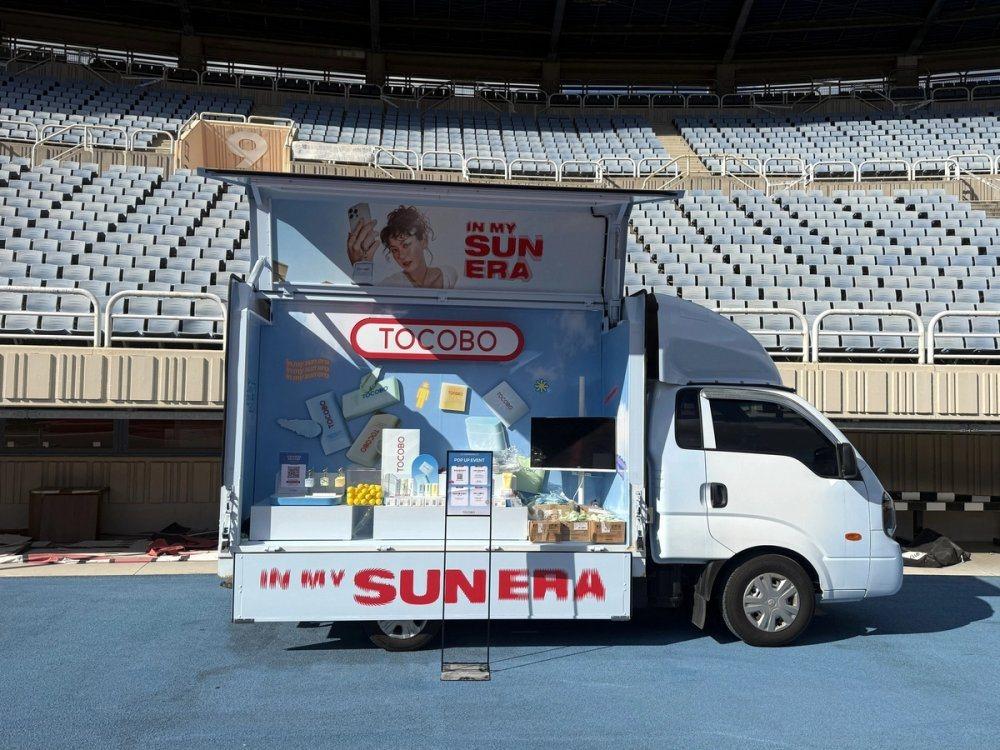
When people talk about opening a popup store in Seongsu, they usually think of a road-shop popup first. Popup rental inquiries also often start with the question, "How big a store can we rent, and for how many days?" But TOCOBO's IN MY SUN ERA campaign, which toured Seongsu and the area around Bucheon Sports Complex from mid-August to mid-September, drove a truck around instead of renting a store. It was a moving popup that had to start from a completely different question than a road-shop popup.
With a moving popup, the schedule comes before the location
A road-shop popup proceeds in the order of securing a location. It is commonly said in the industry that to get the spot you want on Seongsu's main street, you need to start moving at least 8 weeks before your target opening date. A moving popup, by contrast, does not settle on one location; it first draws up a travel schedule of where to go and for how many days.
This TOCOBO moving popup also toured, for close to a month, locations of entirely different character: Seongsu, the area around Bucheon Sports Complex, campuses, and the fronts of company headquarters. A downtown street and a stadium, a school and an office front differ in the hours when people gather and in how they approach. Only once the schedule is set does it become clear what to prepare for each location.
What is easy to leave out when building the schedule is the travel time between locations. Packing up at the previous spot, moving the truck, and standing up again at the next spot all have to fit inside the schedule, and if you plan only around opening hours, you fall behind from the very first location. It is better to treat teardown, travel, and reinstallation as one block and leave a margin.
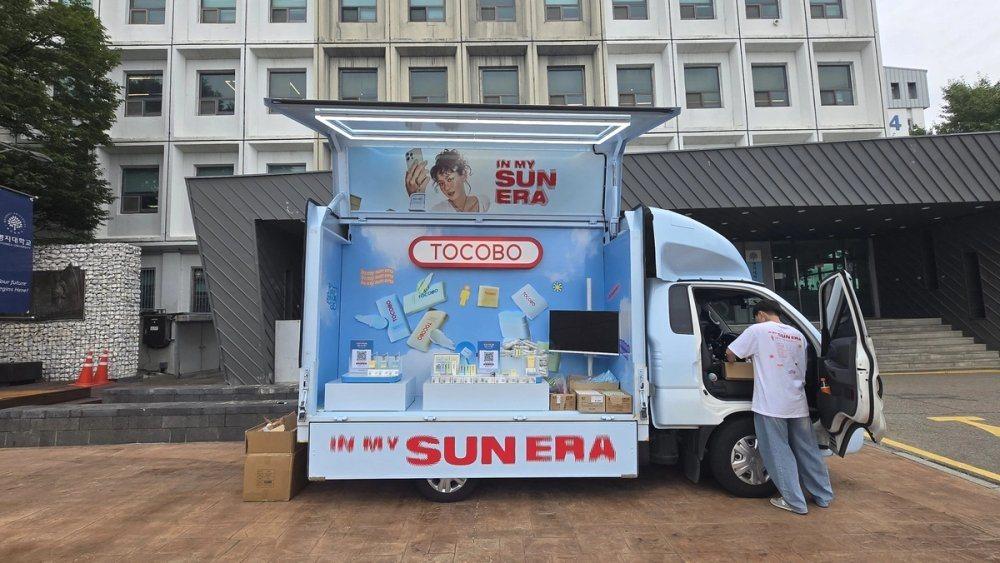
What you prepare depends on whether it is a roadside spot or private property
Roadside operation, with the truck parked beside a sidewalk or road, and places with a separate site manager, such as stadiums, campuses, and company headquarters, involve different preparation procedures. Operating from a vehicle on the roadside is generally known to require a road-occupancy permit or consultation with the local government, and on private property or public facility grounds it is common to agree in advance with the facility manager on load-in times, use of electricity and water, and teardown times.
Because the responsible authority differs by site and the conditions keep changing, it is safer to check again every time before moving on to the next location. A road-shop popup is settled with one contract, but a moving popup has to repeat this process at every place it stops.
Electricity is another thing that changes from place to place. Whether the power on board the truck can last the day, or whether you need to draw power separately on site, determines what equipment you bring. Checking on the advance site visit whether the ground where the truck will stand is level, and whether the width needed when the side opens is actually available, means fewer surprises on the day.
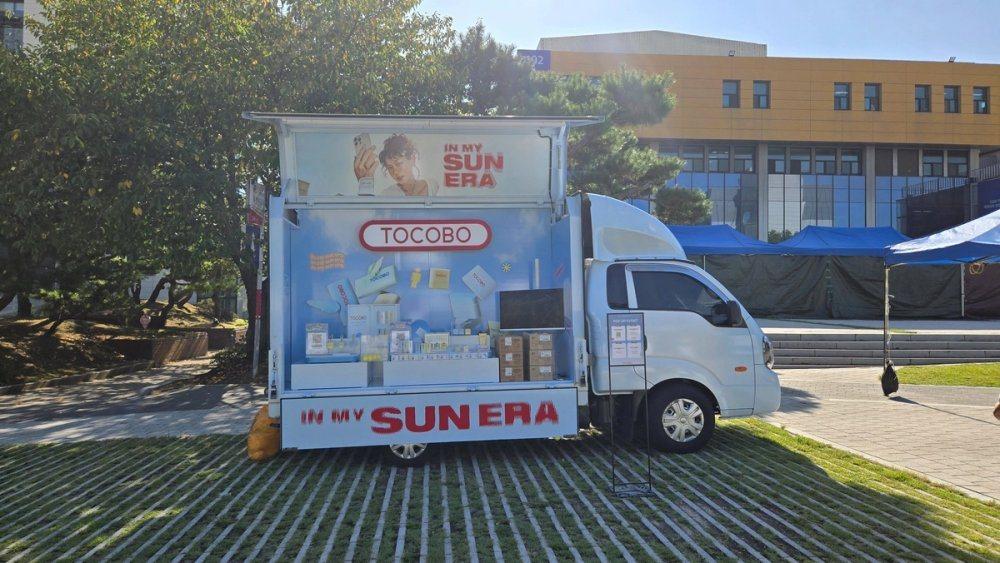
It has to stand the same way wherever it goes
When the location keeps changing, it is a problem if the brand image wavers. That is why most moving popups turn the truck itself into one complete set. This truck, too, was built so that when its side opened upward, the campaign key visual and the product display appeared all at once, and parasols, standees, and information fixtures were set up in front so the same picture came together at any location.
Standardizing the setup this way shortens installation time, and on-site staff do not have to learn it anew each time. How much time you put into this standardization when preparing a moving popup is what decides how difficult on-site operation actually becomes.
Another approach is to photograph the fixture positions and order after finishing installation at the first location. Even if different staff join at the next location, they can recreate the same picture.
Queue management is more sensitive on the roadside
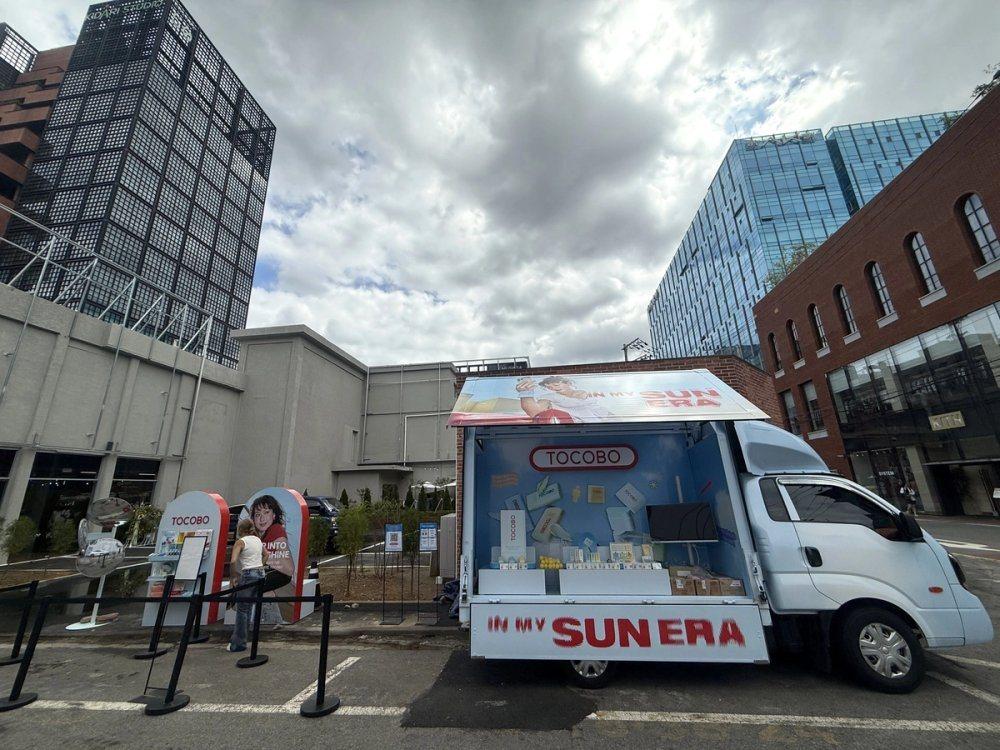
Lining people up inside a store and lining them up on a sidewalk are entirely different problems. At the Seongsu site, a long queue stretched in front of the truck, and stanchions were used to create an entry path so that visitors could wait and enter safely between the sidewalk and the road. This on-site operation was exactly the part TL CREATIVE handled for this moving popup.
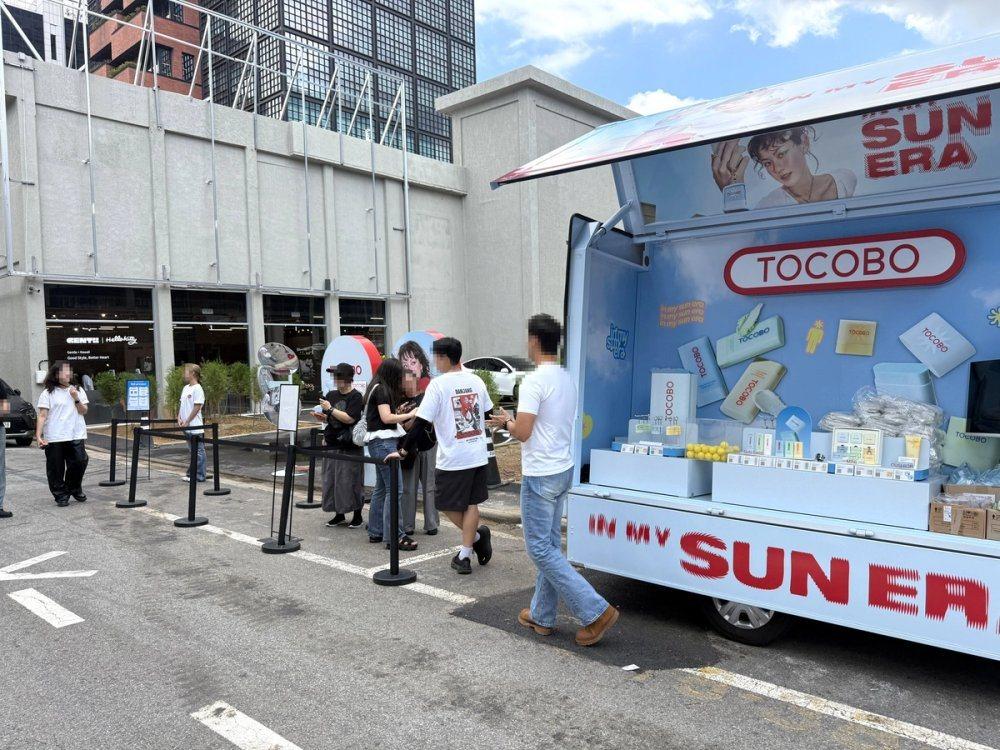
On the roadside, even a slightly longer queue risks blocking the walkway or being pushed toward the road. So it is common to allow more generous flow widths than in an indoor store and to split staff between the end of the line and the entrance.
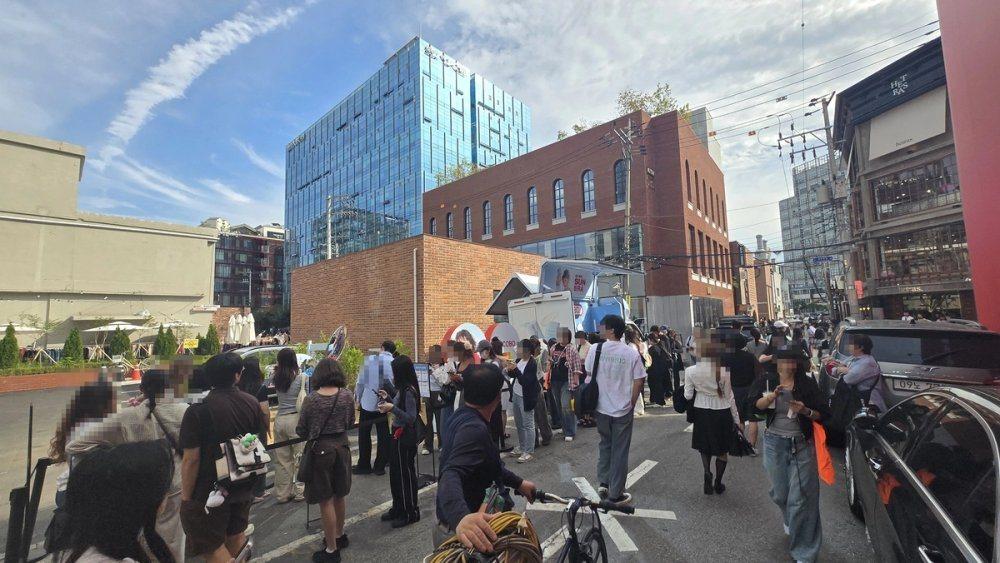
A moving popup is not about renting a space; it is the work of continually readjusting to the schedule and the conditions of each location. Whether you open a road-shop popup in Seongsu or prepare a moving popup that drives a truck to several places, the approach differs, so we recommend first figuring out which one suits you.
TL CREATIVE has carried out 300+ projects, including on-site operations like this. If you are considering a moving popup or a popup rental in Seongsu, feel free to contact us at the scheduling stage.
Original: https://www.tlcreative.co.kr/projects/tocobo-in-my-sun-era-moving-popup