
Running the Victory Procession Parade at the Asan Seongung Yi Sun-sin Festival — Notes From Onyangoncheon Station
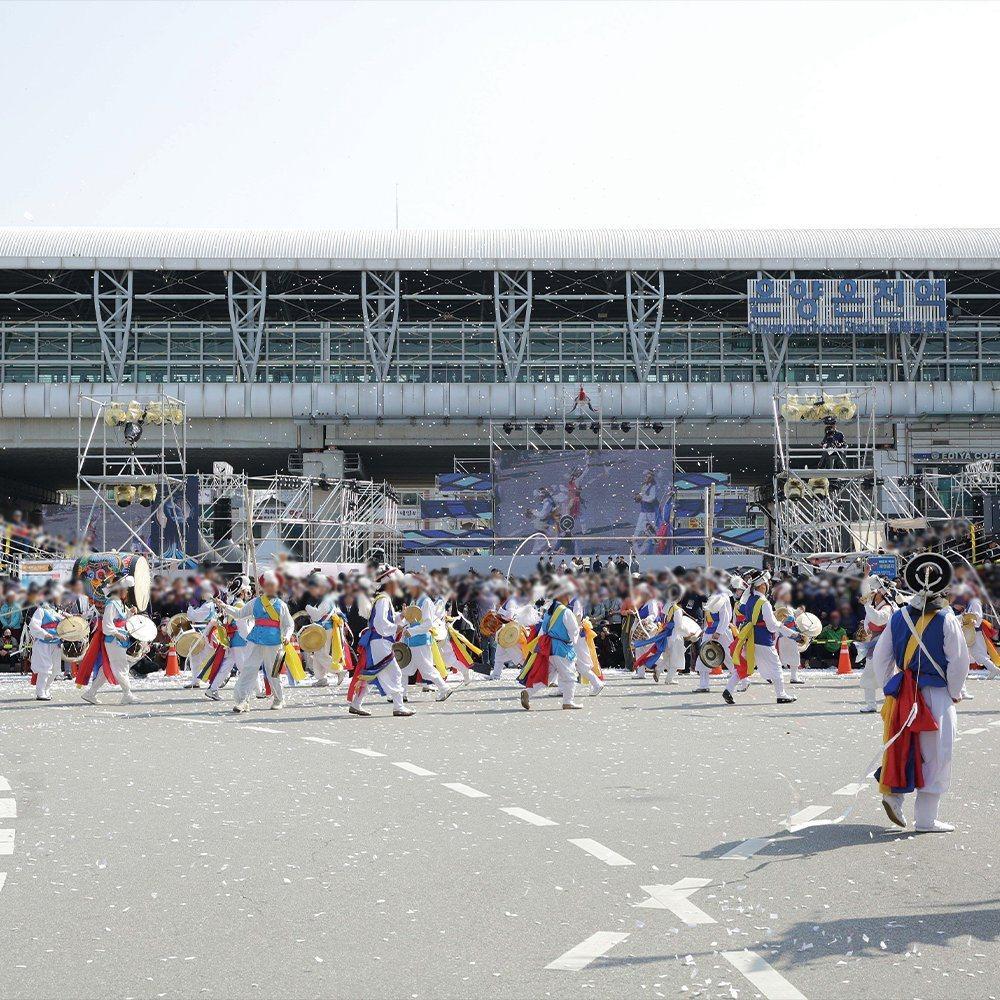
On the afternoon of Saturday, April 26, 2025, the Victory Procession (the Mugwa Geupje procession) of the Asan Seongung Yi Sun-sin Festival took place around Onyangoncheon Station in Asan, South Chungcheong Province, from 3:00 to 4:30 p.m. Held every year to honor the birth of Admiral Yi Sun-sin, the festival has built up a tradition of more than 60 years. TL CREATIVE handled staff recruitment and management for this procession, as well as participant safety and route management.
What kind of procession was it? The procession was divided into three sections, Sim (心), Gi (氣), and Bon (本), expressing the life and spirit of Admiral Yi Sun-sin. At the front stood a large eosahwa and marionettes, followed in line by military ceremonial personnel such as the Navy Jinhae Base Command military band and the Navy Headquarters honor guard, and by local arts groups. Since this was not a single fixed booth but a procession in which people and large sculptures moved together, matching the spacing between ranks and the walking pace was itself the core of operations.
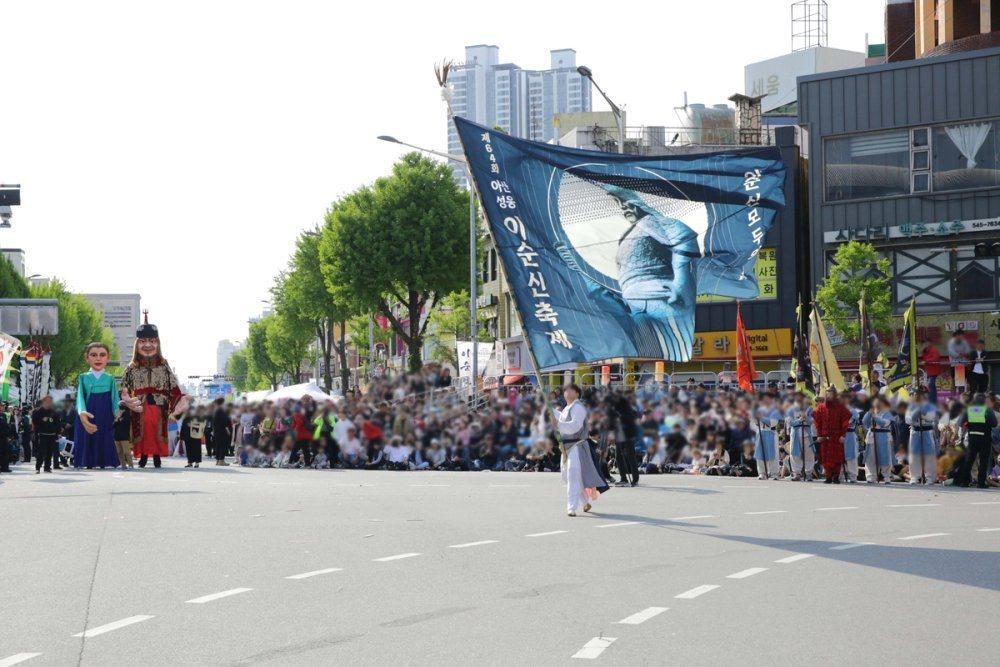
How far did our role extend? TL CREATIVE's role in this Victory Procession was staff recruitment and management, and participant safety and route management. The composition of the procession, the storyline of the three Sim, Gi, and Bon sections, and the production of sculptures such as the eosahwa and marionettes were the festival organizer's domain. We recruited the participants who made the procession move and managed them so they could travel safely from departure to arrival.
Participants gathered at designated spots before departure and entered the ranks in order, and costumes and props were handed out and collected at a designated place on the day, with a procedure for checking for loss or damage looked after as well.
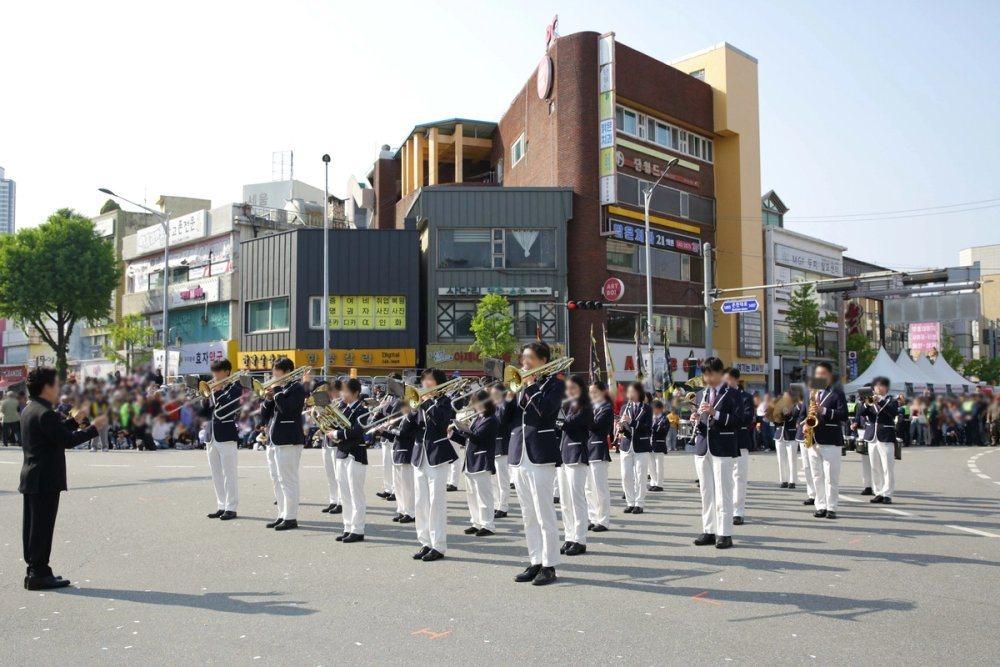
A route has to be seen as a flow, not as positions For a booth where visitors stand and watch, putting one staff member at each spot does the job. A procession is different, because that spot keeps changing. At every point where the road turns and every section where people crowd, we had to station separate staff to match speed and spacing. If the pace of the head and the tail falls out of step, the middle ranks stretch out or break apart, so we placed staff in each section to check the spacing and kept the whole procession flowing.
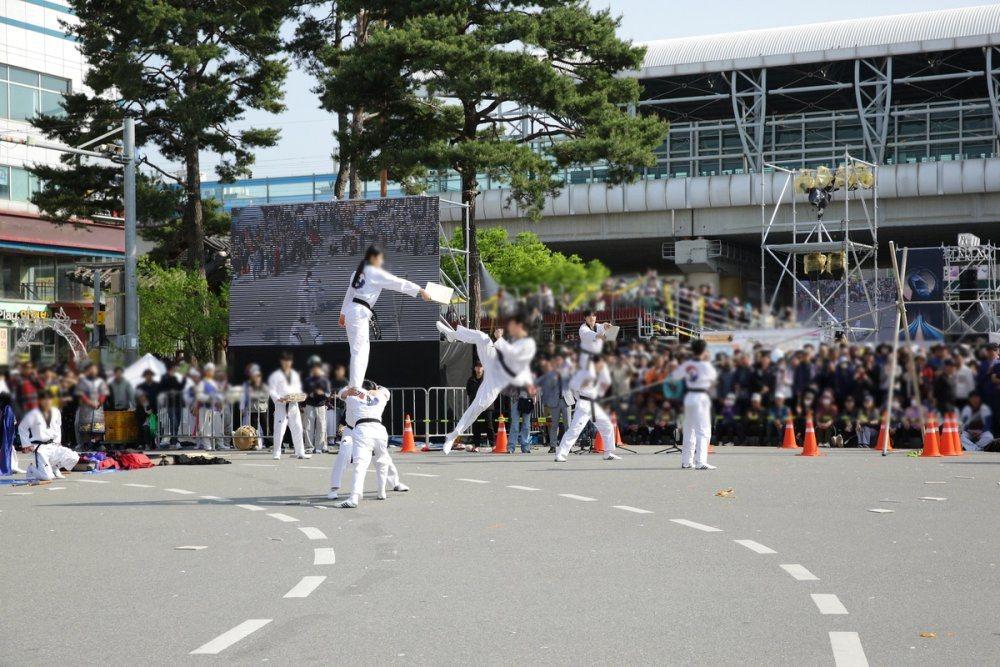
Guarding the line between spectators and the procession The area around Onyangoncheon Station is a place where many spectators gather every year to see this festival. Quite a few also step forward to take photos. So we had to look not only at the safety of procession participants but also control the points where spectators crossed toward the procession. In sections where the road narrowed or where people crowded, we stationed separate staff so the two flows did not mix.
A day that goes straight to the real thing without a rehearsal With procession-type events, it is often hard to schedule a long rehearsal in advance. So in practice, a short briefing before departure to align roles and the signal system matters more. Where to slow down, where to hold back spectators, and whom to contact if something goes wrong all had to be conveyed within a few minutes. When a procession gets long, the very front and the very back have trouble reaching each other by voice, so we also made sure to unify stop, slow-down, and resume signals through radios and hand signals.
If you are preparing a procession-type event or a parade, we recommend reviewing the route and staff placement first. The staff size and movement plan you need follow from there. TL CREATIVE has operated sites like these across 300+ event and space projects.
Original article: https://www.tlcreative.co.kr/projects/project-54-54