
Retail Display Design: When Store Size Differs, So Does the Answer
Sometimes the same collaboration collection has to go into two stores at once. In that case, retail display design isn't done just because you've settled on the collection. When each store has a different floor area and traffic flow, even the same products with the same graphics end up presented differently in the in-store display.
It Starts With Whether You're Inside a Mall or on the Street
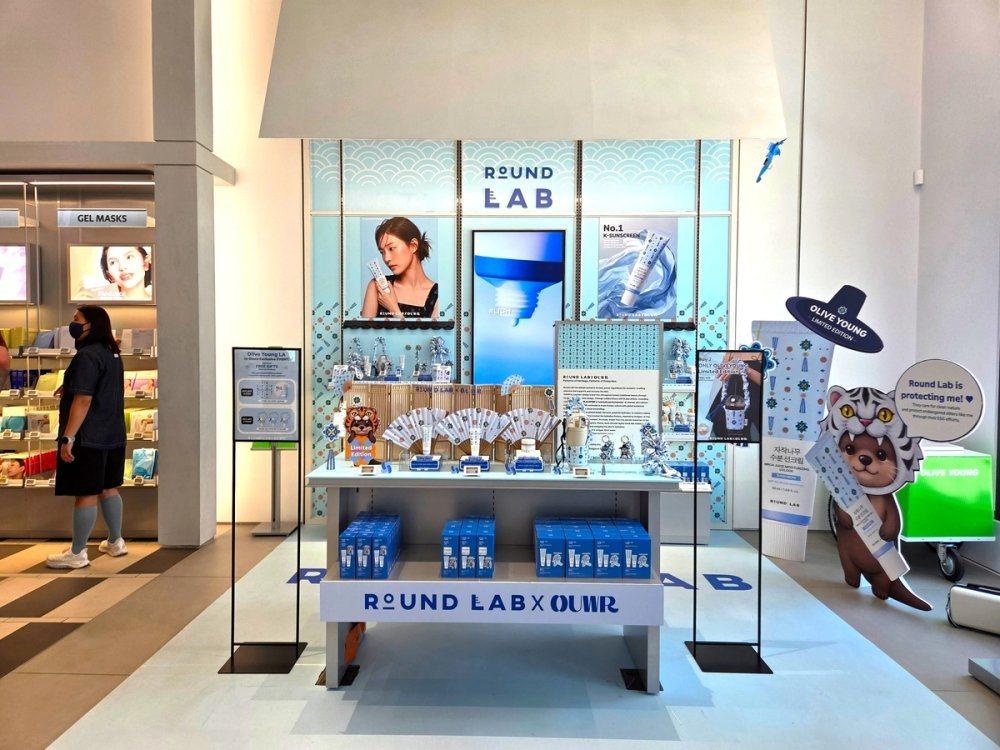
Olive Young once placed the ROUND LAB x OUWR Limited Edition Collection in its two stores in LA. One was a store inside the Westfield Century City mall; the other, a standalone store in Pasadena. By floor area, the Westfield store is 2,694 square feet and the Pasadena store 8,647 square feet — a difference of more than three times.
At a store inside a mall, passersby skim the storefront as they brush past. The first job is getting them to recognize the collection within that brief glance. A standalone store draws people who decided to come in from the start, so there's room to lead them all the way inside.
Small Means Concentrate, Large Means Split
At the Westfield Century City store, the collection was compressed into a single limited-edition display zone. Graphics drawn from traditional Korean patterns and a tiger mascot dressed in hanbok made the whole zone recognizable at a glance. The Birch sunscreen, sun serum, and cream lines were gathered in one place, along with goods such as keyrings and scrunchies.
The Pasadena store had room to spare, so instead of putting everything in at once, the rollout was split into two phases. That one decision set the two stores' layouts completely apart.
Pasadena Opened in Two Rounds
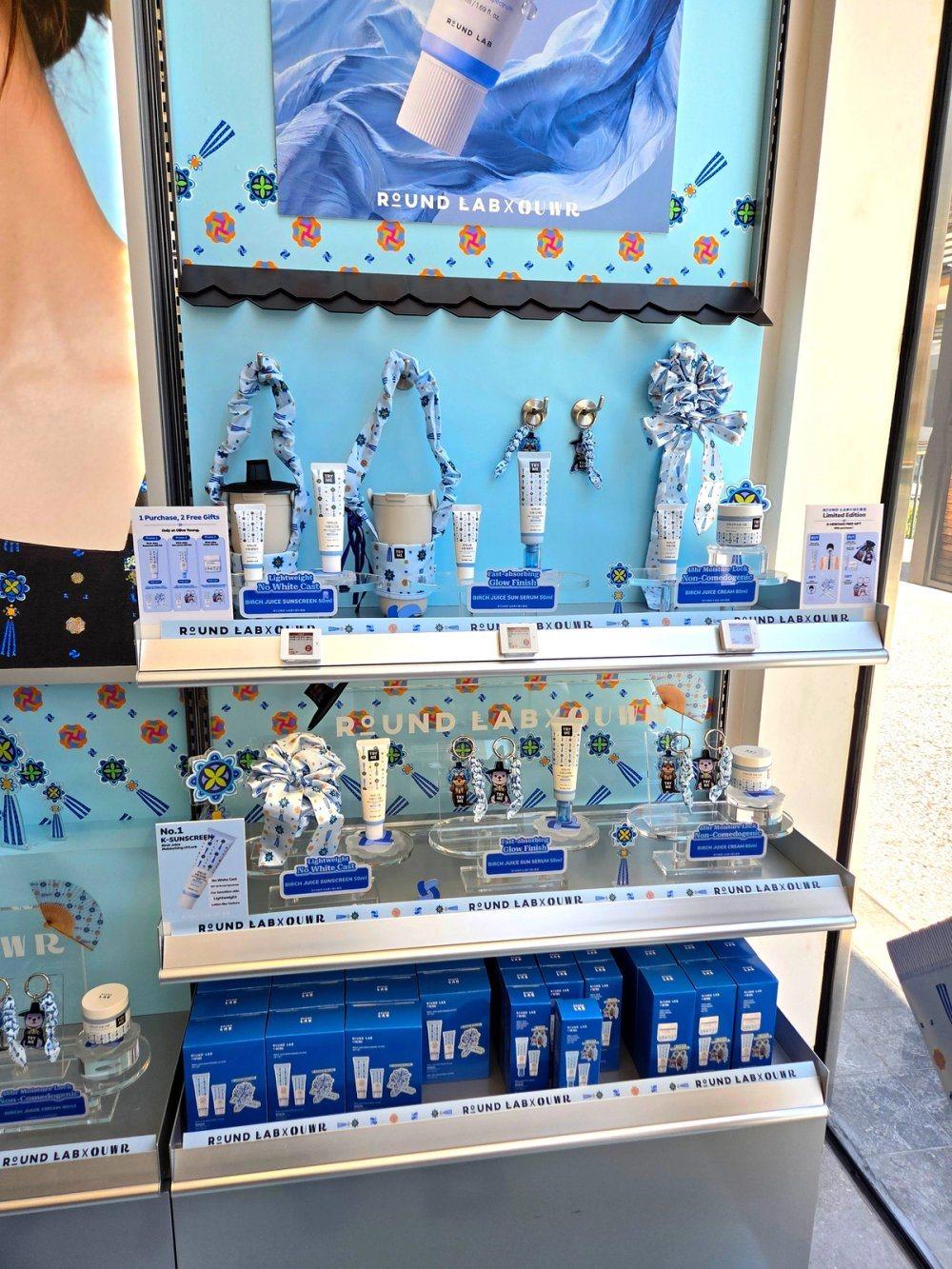
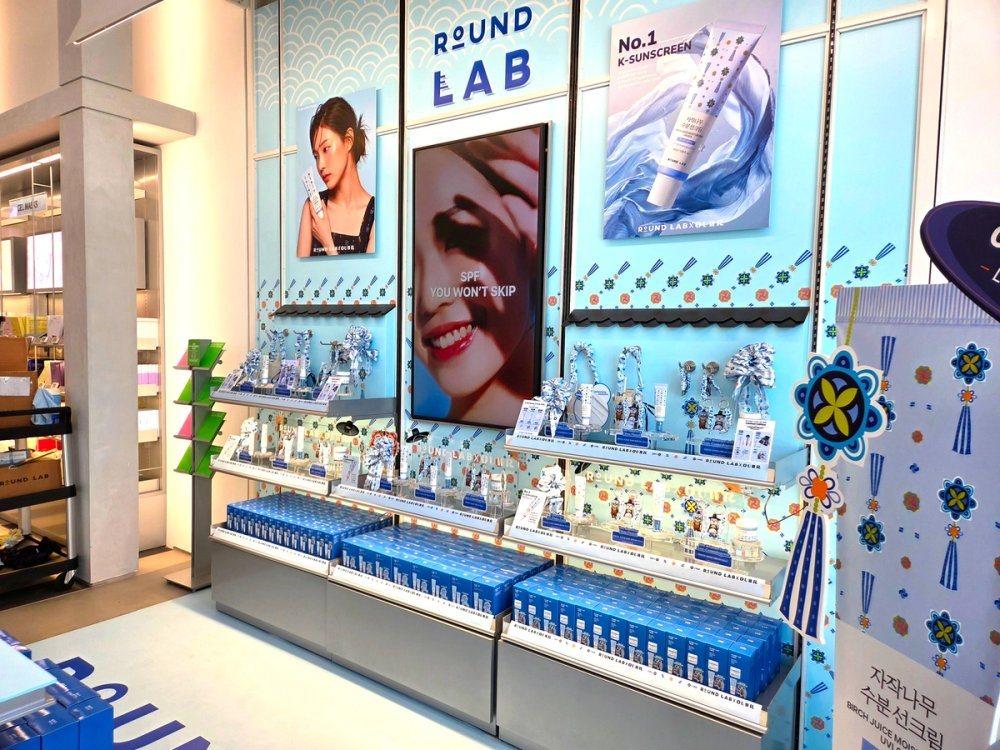
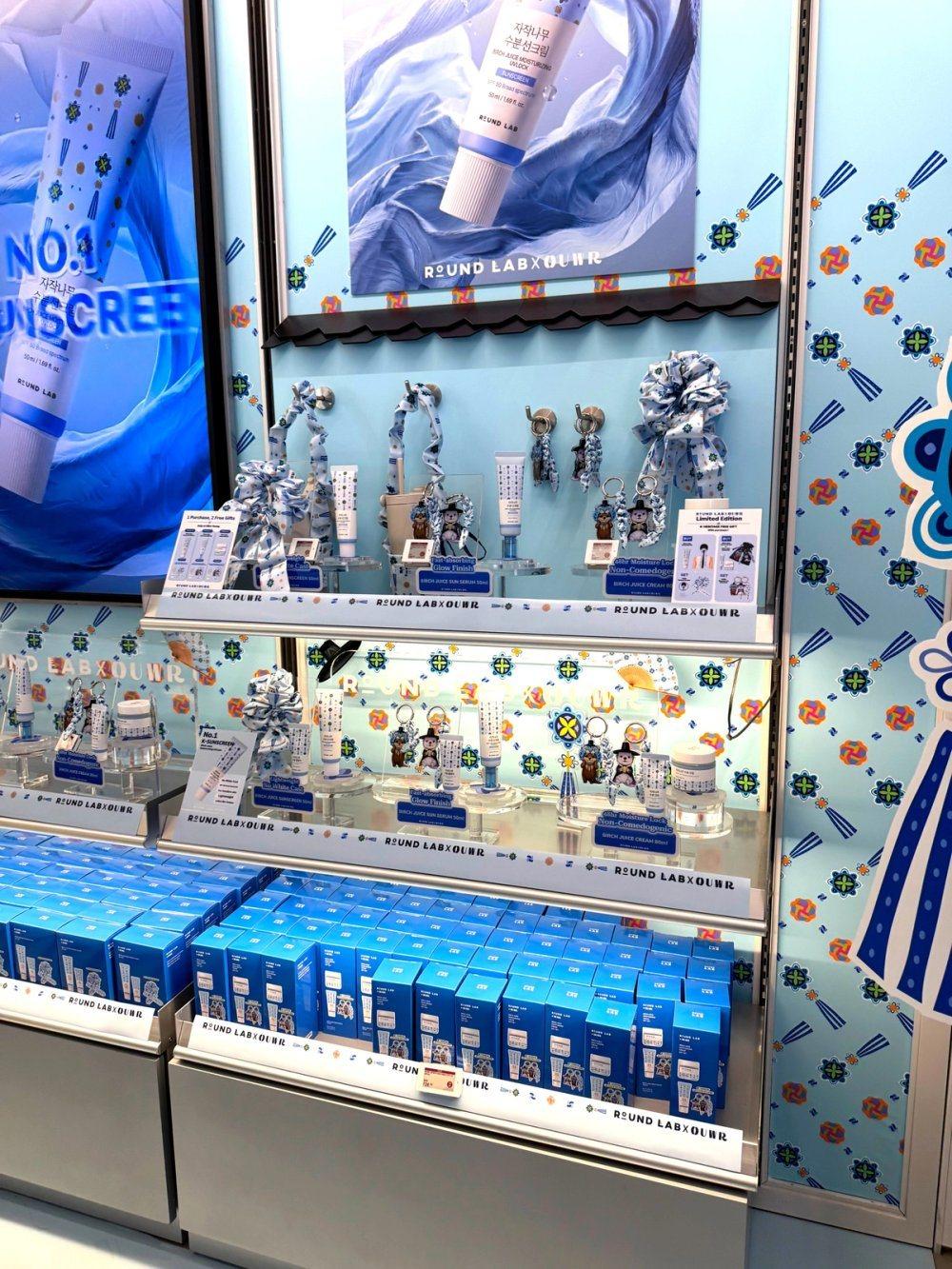
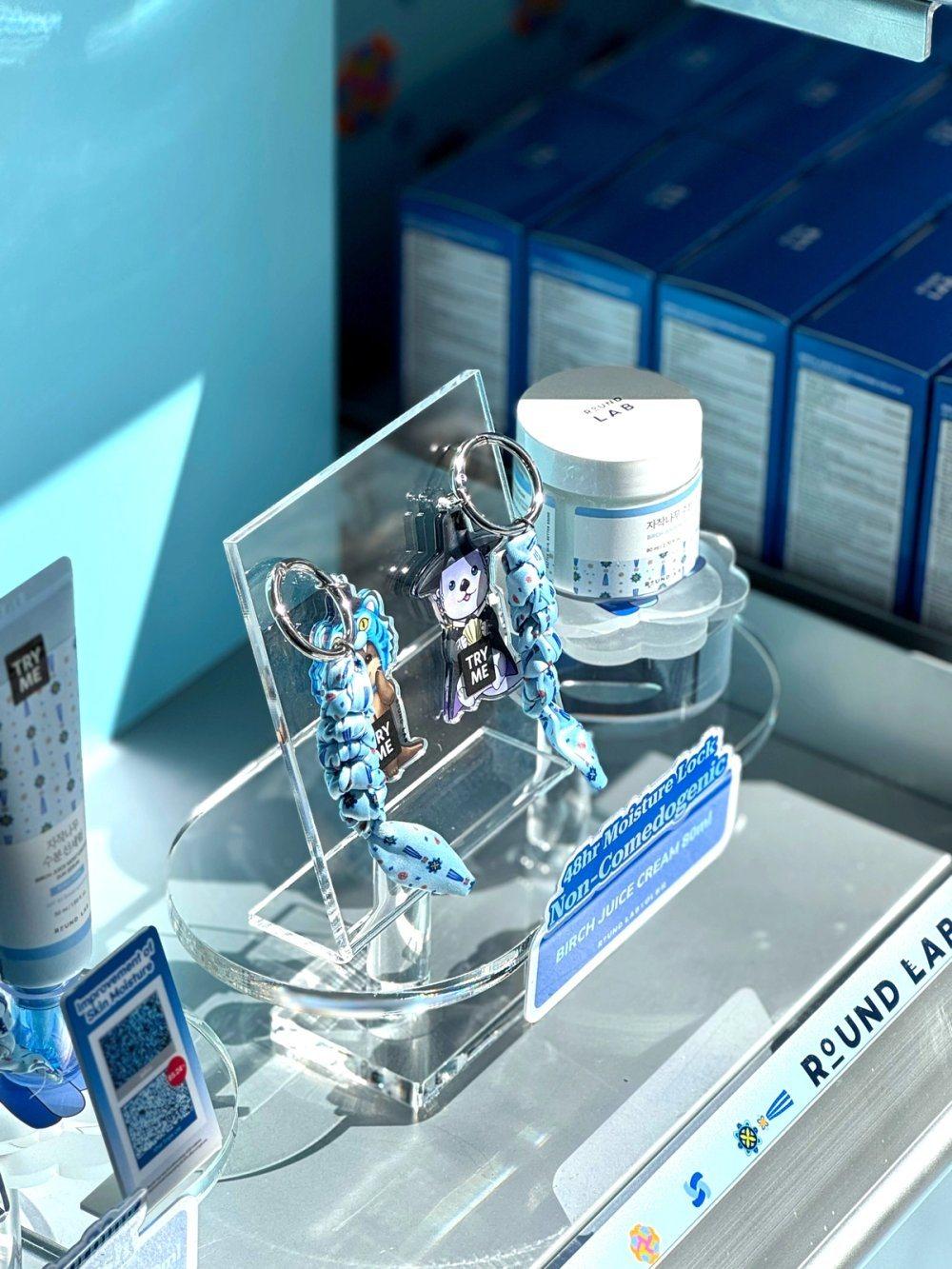
On July 31, the permanent display went in first. It showed the Birch sunscreen, sun serum, and cream lines along with character keyrings and scrunchies made from hanbok fabric, with a digital screen showing the brand story attached as well. This display has stayed in operation ever since as a permanent fixture.
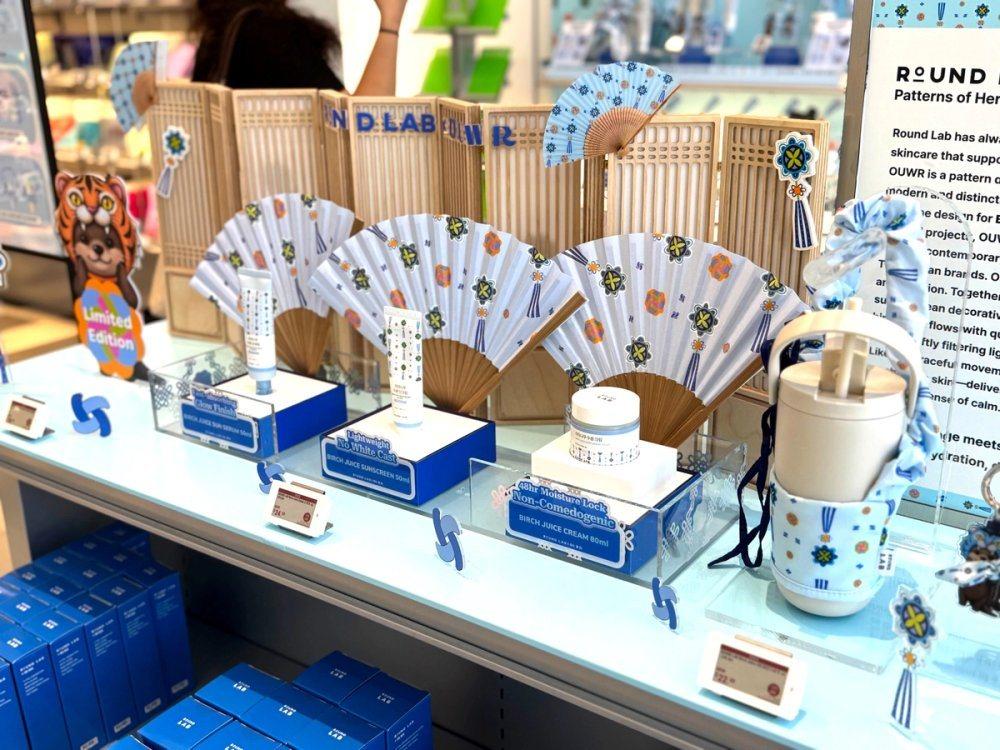
Then on August 3, a separate event table was added inside the store. The space was dressed with a wooden folding screen with a hanji texture and traditional fan objects, creating a spot to handle the products alongside the Olive Young mascot. There was one reason for deliberately separating the permanent display from the limited-time event: with that much floor area, there were two chances to catch customers.
What to Show First Also Changes by Store
Even with the same products, the direction customers walk decides which one goes up front. At a store inside a mall, people often see it out of the corner of their eye as they pass along the aisle, so it pays to put a visual that reads instantly as the collection right at the front. That means placing strong elements, such as the Birch sunscreen tube or the mascot graphic, head-on to the direction of entry.
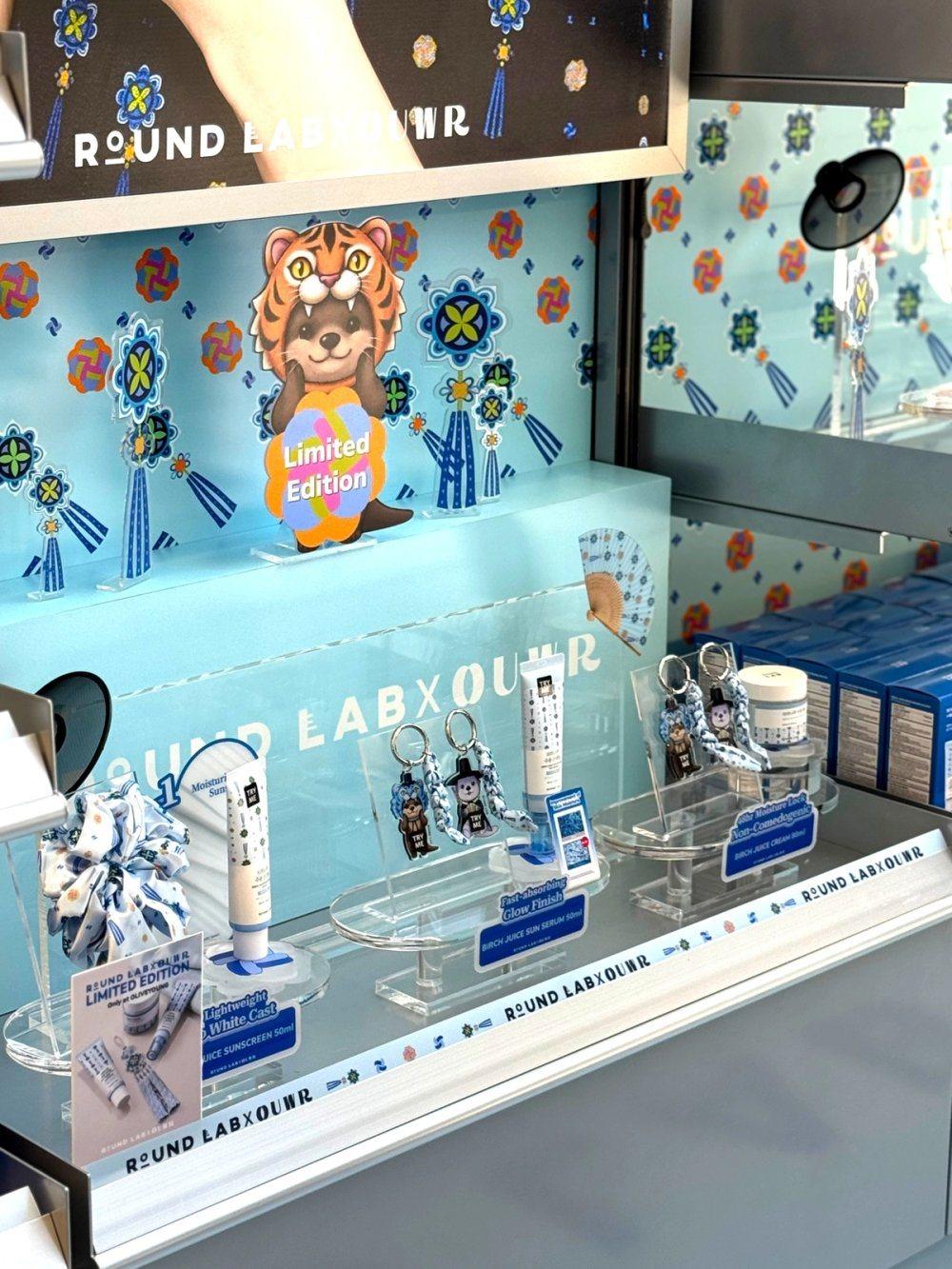
At a standalone store, customers scan the products one by one as they walk deeper inside. With this kind of flow, rather than showing everything from the start, it works better to put the skincare line up front and move goods and hands-on elements further back along the way in. Even with the same product assortment, the display order has to be reworked to fit each store's flow.
Reuse One Drawing and Something Always Goes Wrong
Even for the same brand and the same collaboration, the drawings are made fresh for each store. Existing fixture positions, electrical wiring, and aisle widths are all different. Lay a drawing used in one store straight onto another, and something on site will not fit. When a collaboration collection goes into several stores at once, measuring each store on site is the starting point.
Because the work involves putting displays into stores that are already open for business, installation also goes in outside business hours. Delivery and assembly have to be finished without blocking customer flow so the store can open as usual the next morning. For displays that stay permanently, finishes and fixing methods are also set a step higher. These aren't fixtures used for a few days and torn down, but places customers' hands touch for months.
This Decision Should Already Be Made at the Site Survey
When store area and shape differ, even the same collection has to be worked out differently. Compress it if it's inside a mall; break it into phases if it's a standalone store. If you start thinking about this while drawing the plans, you're already late. The conclusion needs to be reached at the store survey stage.
TL CREATIVE has created 300+ popups and brand events in Korea and, with local partners, overseas. In-store display work is one part of that. If you need to put the same collection into several stores at once, feel free to get in touch with just your store list.
Project details: https://www.tlcreative.co.kr/projects/pasadena-roundlab-ouwr-olive-young