
Running a Popup Experience Zone: What Changes When You Also Want Turnover
When planning a popup experience zone, almost everyone starts by asking, "Where should the photo zone go?" But the real issue is not the location; it is the operation. For brand experience marketing to gain traction, you need to rethink how the photo zone is run first.
An experience zone is a space built to hold on to people. But if it really holds on to them, the people coming behind can't get in. Achieving both at once is the real task of an experience-zone popup.
An experience zone blocks as much as it holds
The reason for adding experiential elements is simple. Touching, applying, and taking photos stays in memory more than just looking and passing by. The problem is that the longer that experience lasts, the more the queue builds up behind.
So when designing an experience zone, we always measure two times together: how long one visitor stays, and how long the next person waits. Once the gap between these two starts to widen, the experience zone becomes a bottleneck in no time.
The solution is surprisingly simple. Split the experience into several stations rather than one, and set the time each station takes in advance. Staff also take on the role of moving people on to the next part of the route naturally, without making it obvious they are keeping time.
A bigger photo zone is not necessarily better
Only a few years ago, the standard popup photo zone was a large photo wall filling an entire wall. These days the trend is a little different. Setups where the photo is done in a single motion, like mirror selfies or camcorder selfies, are used more often.
The reason is simple. With a large photo wall, a line forms behind while people frame their shots and take several. A setup where you take one shot in front of a mirror and move on turns over quickly. What matters in running a photo zone is not how pretty it is but how quickly it passes on to the next person.
From the brand's point of view, this can feel like a loss. A big, flashy photo zone stands out more on social media. So in practice, a common approach is to scale it down and place it at the end of the route, so that taking a photo leads naturally to the exit.
How we planned the EUYIRA relaunch popup
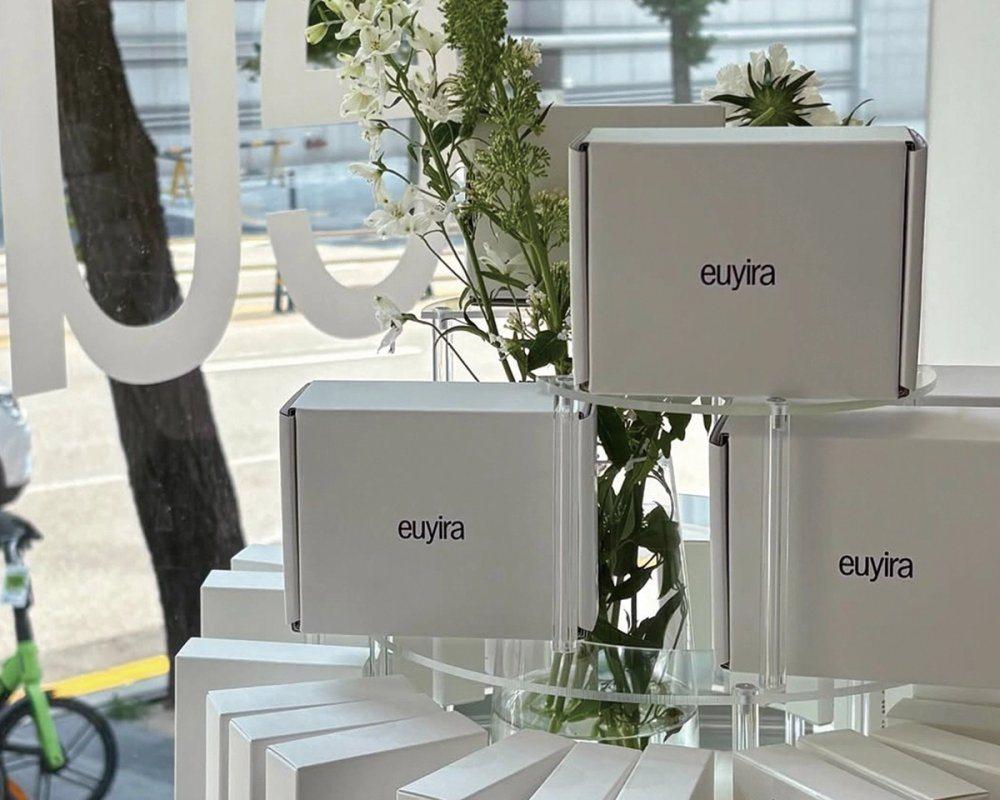
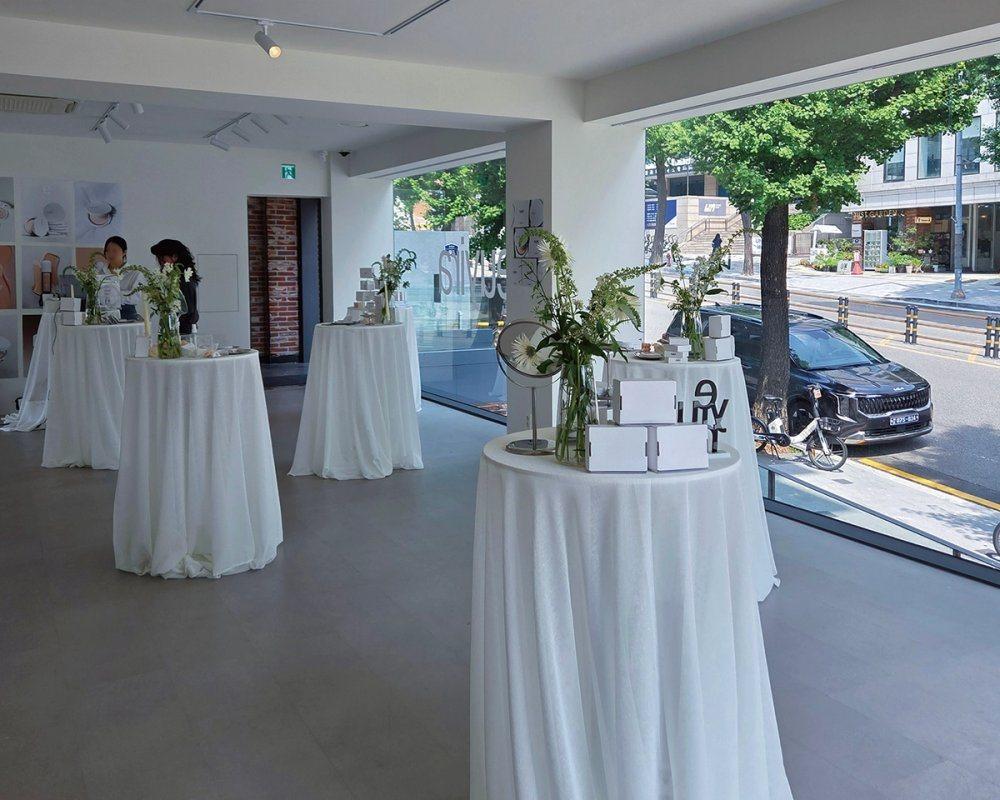
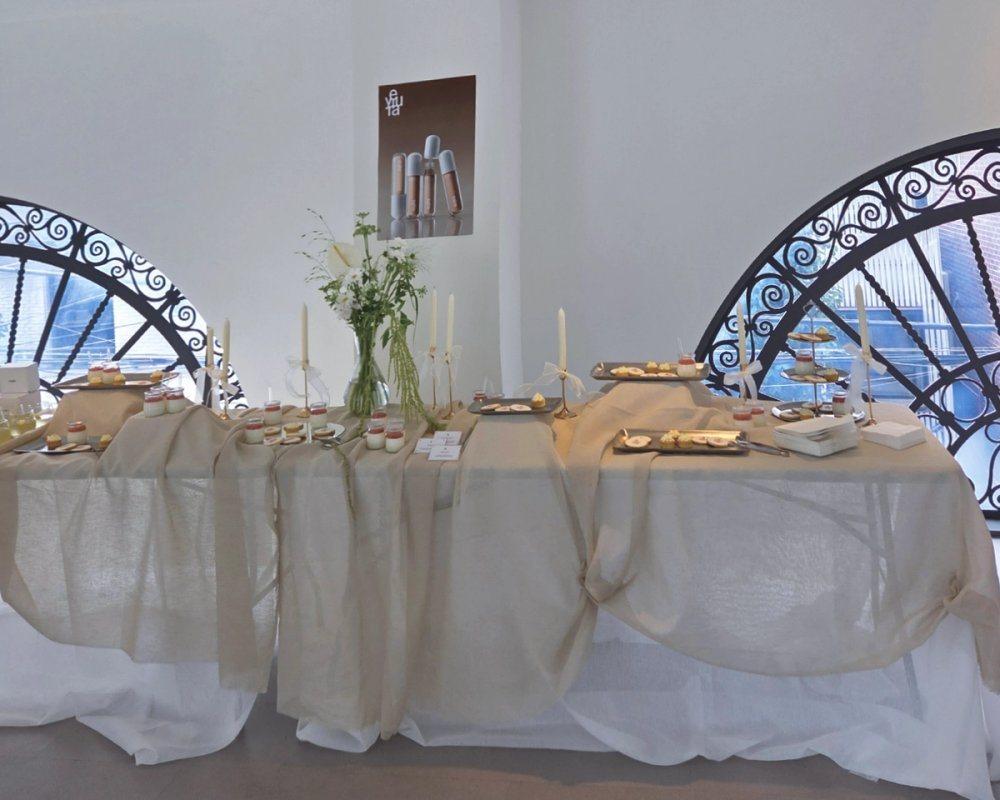
On July 1, 2026, beauty brand EUYIRA opened a relaunch popup store at Depanew HQ in Seoul. The space used a white-toned minimal design with linen fabric, white flowers, and silver cutlery, carrying the brand's clear, refined image straight into the room.
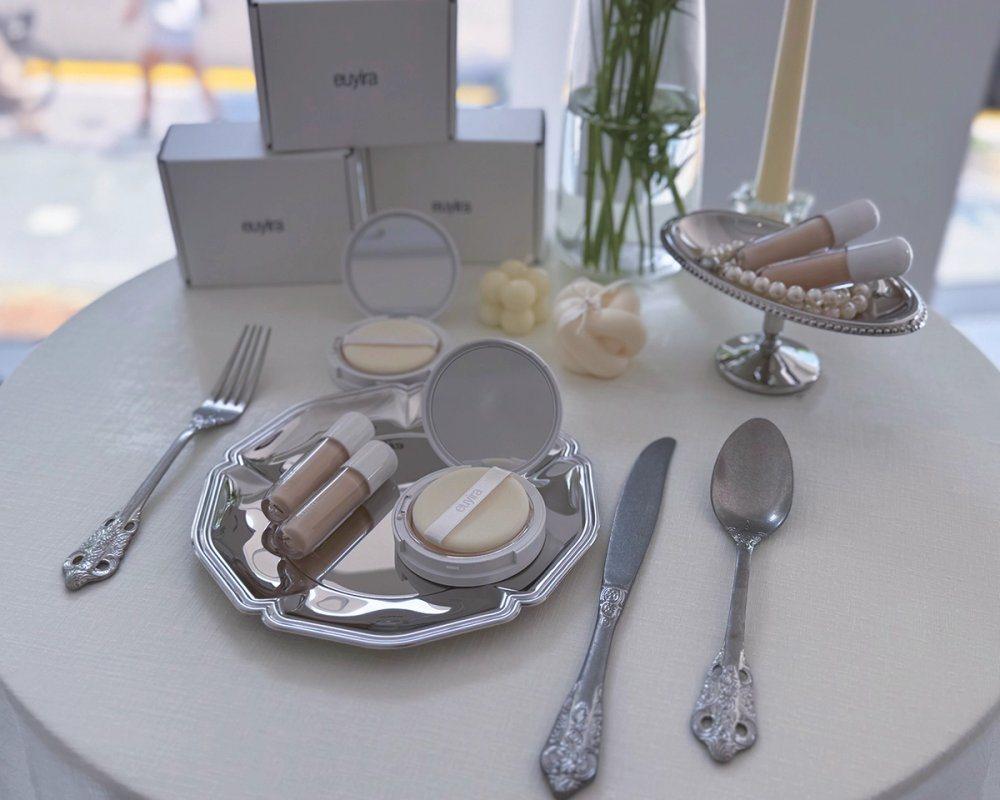
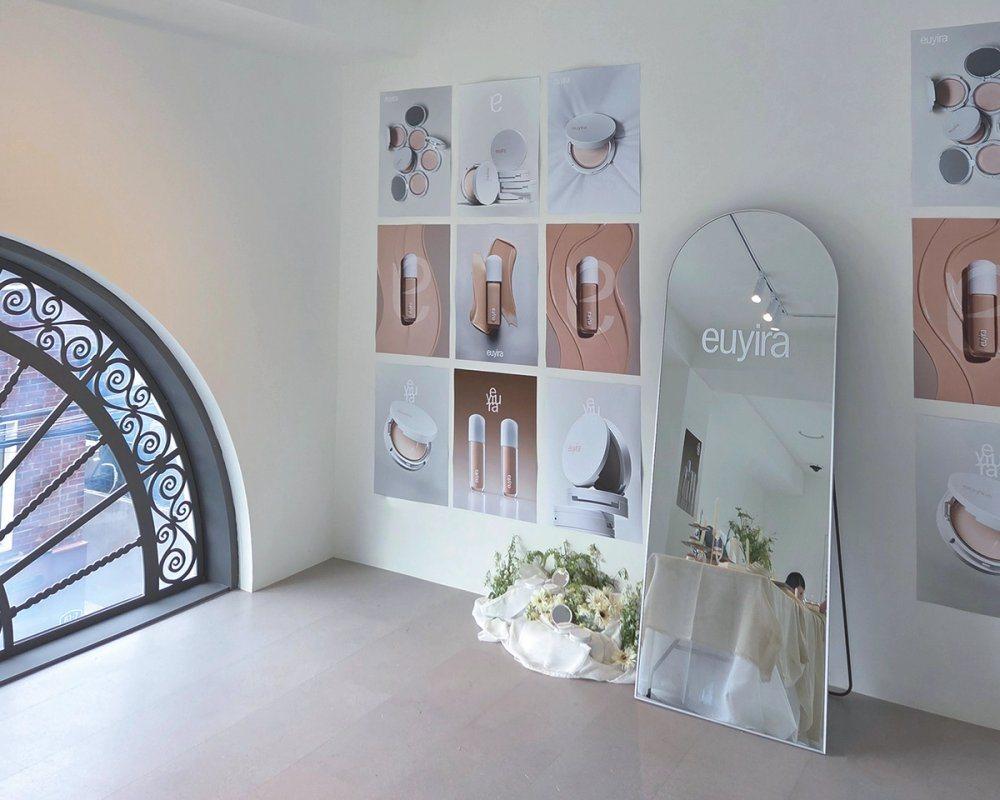
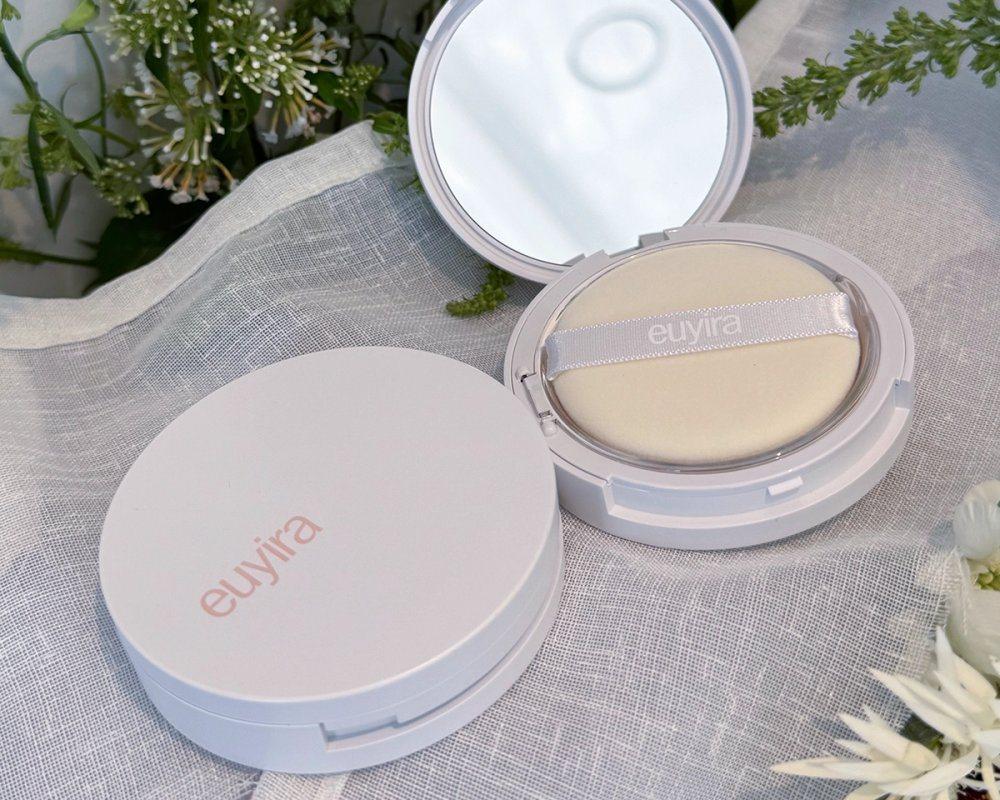
To let visitors try the makeup line, including the bestselling cushion and concealer, a poster wall, a full-length mirror photo zone, and a catering area were set out in separate spots. On this project, TL CREATIVE handled the entire process, from popup planning to spatial design, VMD, and on-site event operations.
Placing the spot where people try products close to the photo point creates a flow by itself. If the route lets people apply a product and then take a photo right next to it, as if checking the result, visitors move on to the next step on their own without separate guidance. Using a full-length mirror as the photo zone can be seen in the same light. People can check themselves right there and move on, without a separate photo shoot.
People are what complete the flow
No matter how well you draw the flow, it is useless without people holding those positions. In a popup with an experience zone, roles are broken down much further: guidance, running the experience, sales, inventory management, and queue management. Once one person starts covering two roles, a delay is bound to occur on one side.
On days when celebrities or influencers visit in particular, the front of the experience zone can suddenly get crowded. Taking such swings into account, it is safer to decide ahead of time that staff can be flexibly redeployed during peak hours. If you rely only on a fixed staffing chart, you will be slow to respond at the very moment the crowd hits.
A popup with an experience zone needs good content and good management at the same time. Pay attention to only one of the two and problems are bound to arise on the other side. That is why experience time and staffing need to be designed together from the planning stage.
TL CREATIVE has carried out 300+ projects spanning popup planning, spatial design, VMD, and on-site operations. If you are preparing a popup with an experience zone, feel free to contact us as early as the flow-design stage.
Project details: https://www.tlcreative.co.kr/projects/legacy-ix-300