
Popup Store Planning: Start With the Concept and You'll End Up Tearing It All Up
When we get a popup store planning inquiry, nine times out of ten it starts like this: "We want to go a bit hip this time." "For the mood, neutral tones."
We get it. That's the most fun part for us too. But if you go in that order, odds are you'll draw the plans twice.
The space is not negotiable
Ceiling height, power capacity, load-in hours, whether you can put nails in the walls. These aren't things we decide; they're simply given values.
You've drawn a beautiful 4m structure, but the ceiling is 2.7m? Then that drawing is just paper. No matter how good the concept is, if it doesn't fit, that's the end of it.
The later you change, the more it costs
This is the real crux.
Change direction during planning → you just redraw on paper. Change after design is done → you pay for drawings again. Change after production starts → the material already cut just gets thrown away.
It's the same change, but depending on when you make it, the scale of the cost itself is different. That's why spending time on planning ends up being the cheapest option. The more of a rush you're in, the more you shouldn't hurry here.
So in practice, this is the order we go in
First, we pin down in one sentence why this popup is opening. Is it here to raise awareness, or here to sell? If this is fuzzy, every decision that follows wobbles along with it.
Next, we see the site in person. Even if we've received the drawings, we go. There are more cases than you'd think where the drawings and reality differ. A column that isn't on the drawings is there on site, the outlets are in different places, and there's a sprinkler in the ceiling right where our structure is supposed to go.
Then we map out how people will move. What they see first when they come in, where they stop, where they take out their phones, and where they leave. Only once this route is set do the fixture positions come out.
What often gets missed here is the photo spot. These days, if a popup doesn't produce photos, it doesn't spread. So when we draw the route, we mark right on the drawings the spots where we think people will take out their phones. That's because the lighting angles and the finish of the background walls have to be reset based on those spots.
The concept comes out here. It's fourth.
After that, we count backward from opening day. Installation day, load-in day, production completion, drawing sign-off. Skip this backward calculation and you'll be up all night before opening. Really.
Last is operations. How many days, how many people, who does what. If there are experience elements, you even have to calculate how many minutes each person takes so the waiting line doesn't back up.
Overseas, one more thing gets added
Whether to build the fixtures in Korea and ship them, or have them made locally.
Shipping gives you reliable quality, but adds freight costs and customs time. Making them locally is faster, but you can't see the finish quality in advance. If this call isn't made during planning, the whole schedule can't be set.
Venue rules all differ too. Load-in hours, which tools you can use, fire safety standards. Design to Korean standards and you'll be tearing things apart on site.
When we built a fragrance booth in LA
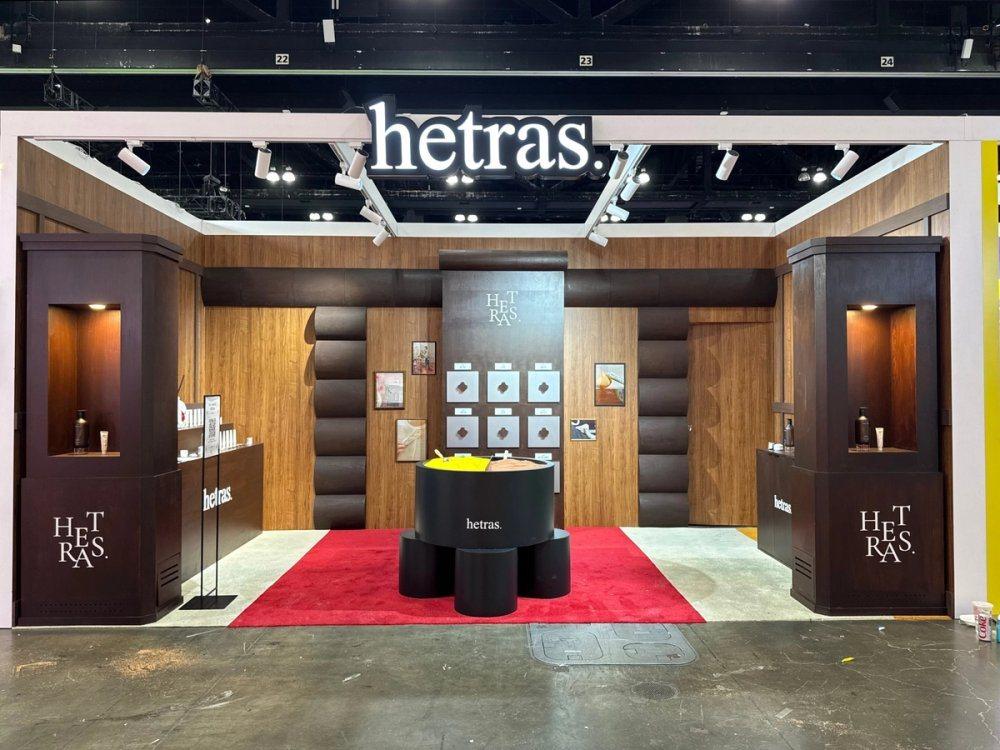
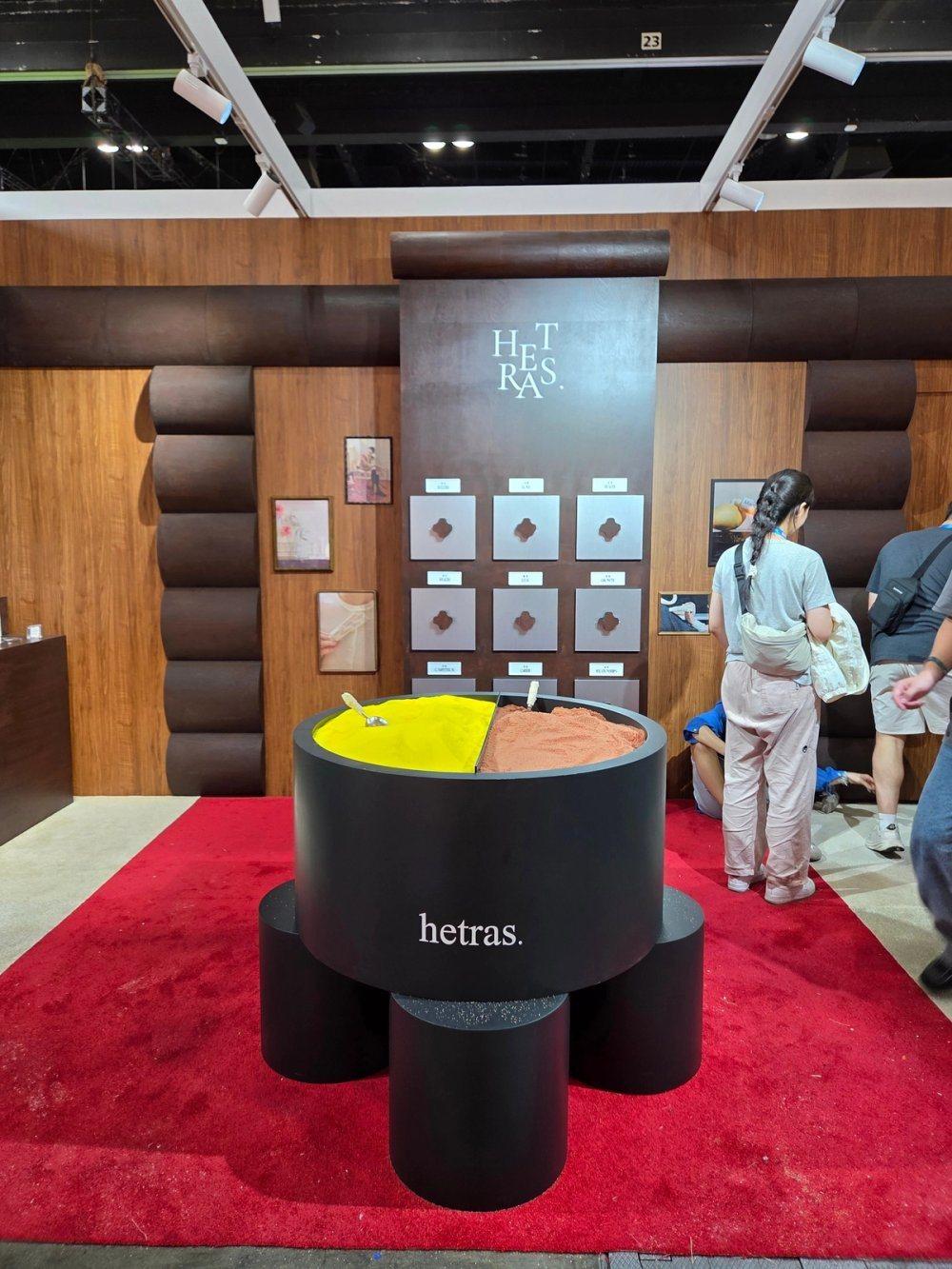
This past August, the Korean fragrance brand hetras took part in Olive Young Festa 2026, held at the LA Convention Center. TL CREATIVE carried out everything from booth planning to spatial design, fixture production, and on-site installation in the US, working with local partners.
Fragrance doesn't sell through photos. You have to smell it to know.
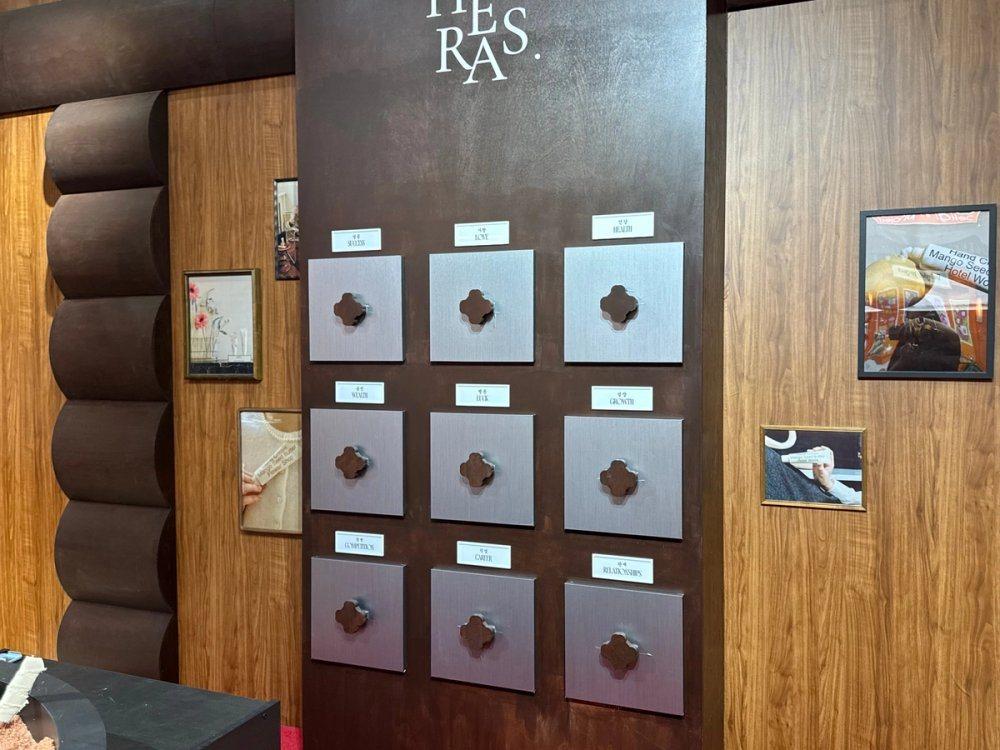
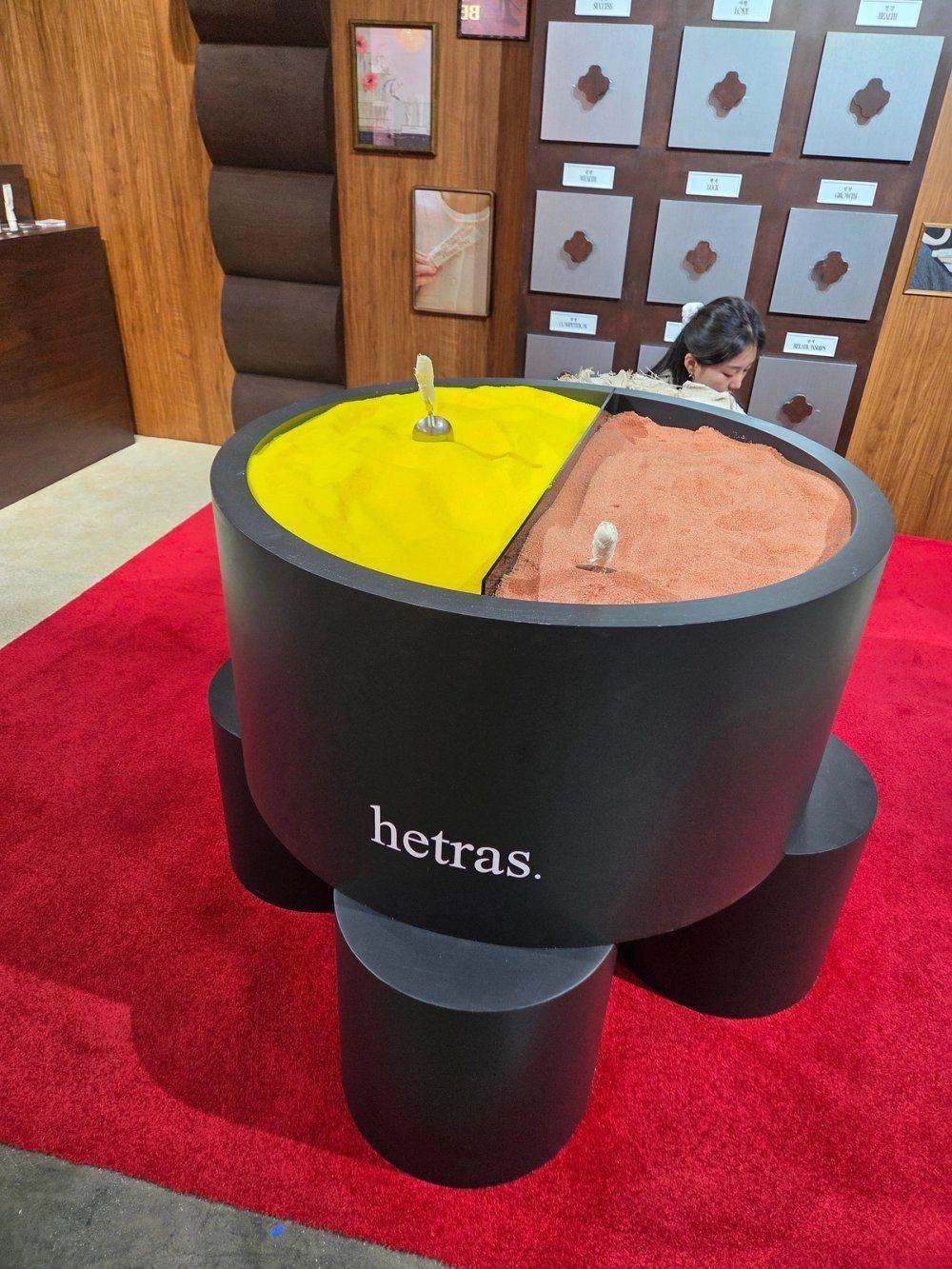
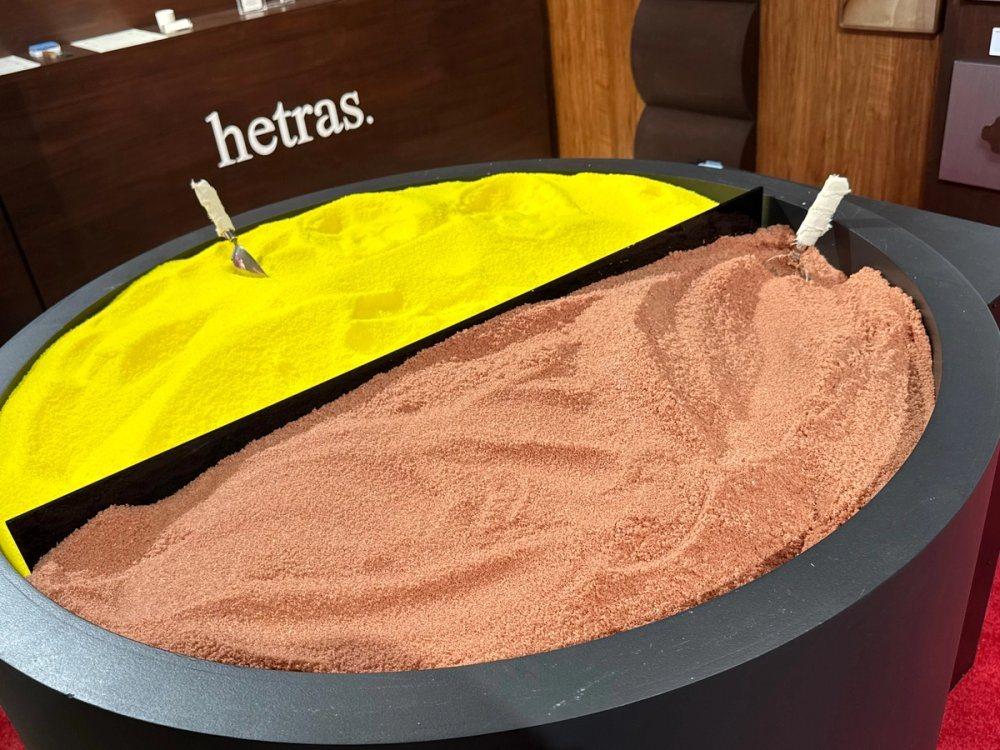
So we placed a sculptural piece for smelling the scents firsthand right in the middle of the route. Health, love, luck, wealth... we expressed nine meanings, one by one, as scents. Not a booth you stand and look at, but a structure that makes you reach out your hand.
For the entrance we went with wood tones and a red carpet. If you've been to a trade show you'll know, there are dozens of booths packed side by side. Without something at the entrance to hold people's eyes, they just pass by.
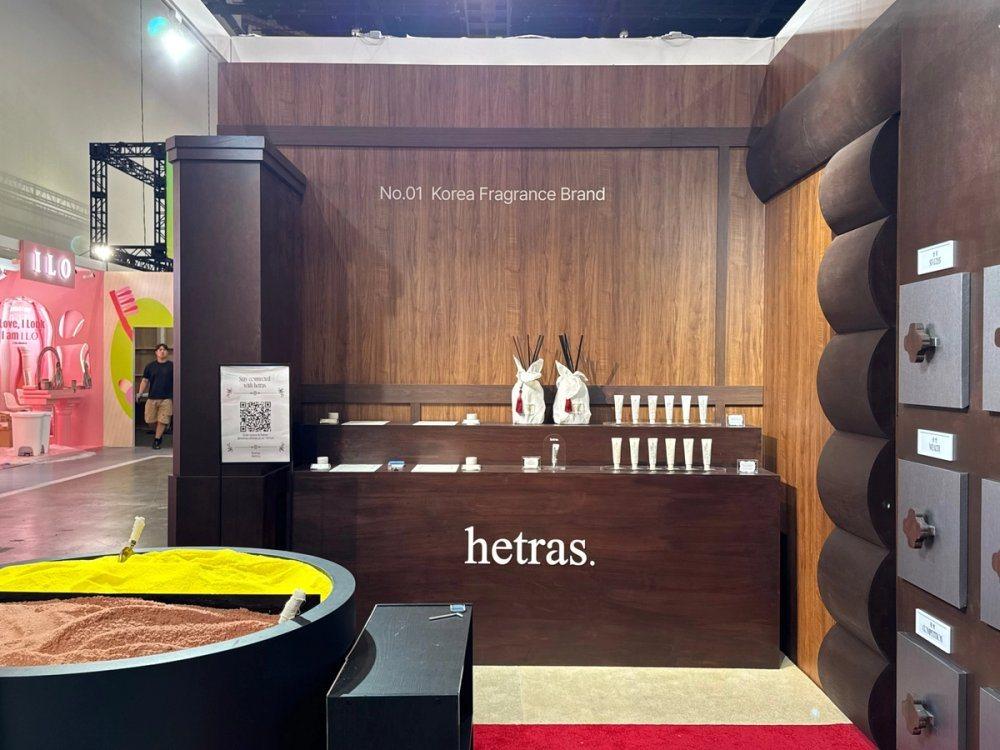
Both sides were retail zones. We laid out diffusers, hand creams, and body washes. The order is smell the scent first, then touch the actual products. If it had been the other way around, there would have been a jam in front of the sculpture.
In the end
Purpose → conditions → route → concept → schedule → operations.
It might feel a bit deflating that the concept comes fourth, but if you go in this order, the chances of tearing it all up midway definitely go down. Overseas, a logistics decision and a check of local regulations each get added toward the front of this.
TL CREATIVE has carried out 300+ projects across popup planning, spatial design, fixture production, and on-site operations. Whether in Korea or overseas, if you're preparing a popup, toss it our way before you settle on a concept. That stage is the cheapest one.
Project details: https://www.tlcreative.co.kr/projects/la-hetras-olive-young