
Placing Pop-up Docents and Promoters — This Is How We Divide Visitor Service at a Department Store Pop-up
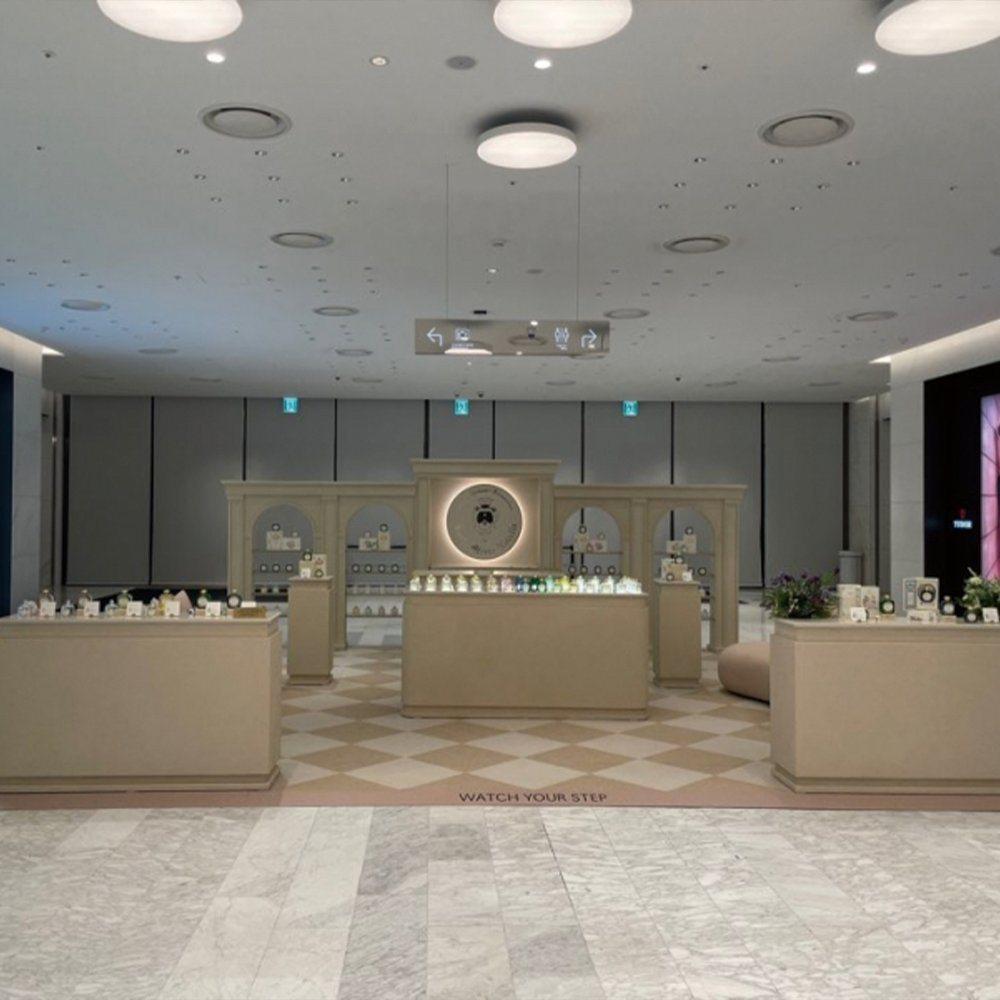
“Can’t you just put people on the floor?” We hear this question a lot early in pop-up meetings. We heard it again when TL CREATIVE took on event operations for the Santa Maria Novella pop-up store, held for six days from October 22 to 27, 2024, at The Hyundai Seoul in Yeongdeungpo-gu, Seoul. To put the conclusion first: a department store pop-up is less about putting people on the floor and more about dividing roles and placing people by role.
Docents and event promoters: what's the difference
A docent explains the brand and its products; an event promoter keeps things running on site and helps with visitor flow. Give both jobs to one person and both end up half done. If someone has to answer a visitor's question about ingredients while also keeping the queue in order, nine times out of ten one of the two slips.
The wider a brand's product range, the more this split matters — and Santa Maria Novella covers face, body, hair, fragrance, soap, and home scents. Each visitor is curious about something different, so you need people dedicated to explaining if service is not to break off.
Why the split matters more in a department store pop-up
Unlike a street shop or an outdoor booth, a department store pop-up runs for a short time, and visitor density varies sharply by day of the week. Weekdays flow differently from the extended-hours Fridays, Saturdays, and Sundays, so it is hard to get through all six days with the same staffing. The pressure to keep service quality consistent over a short period is much stronger than in a street shop.
What a docent prepares before going on the floor
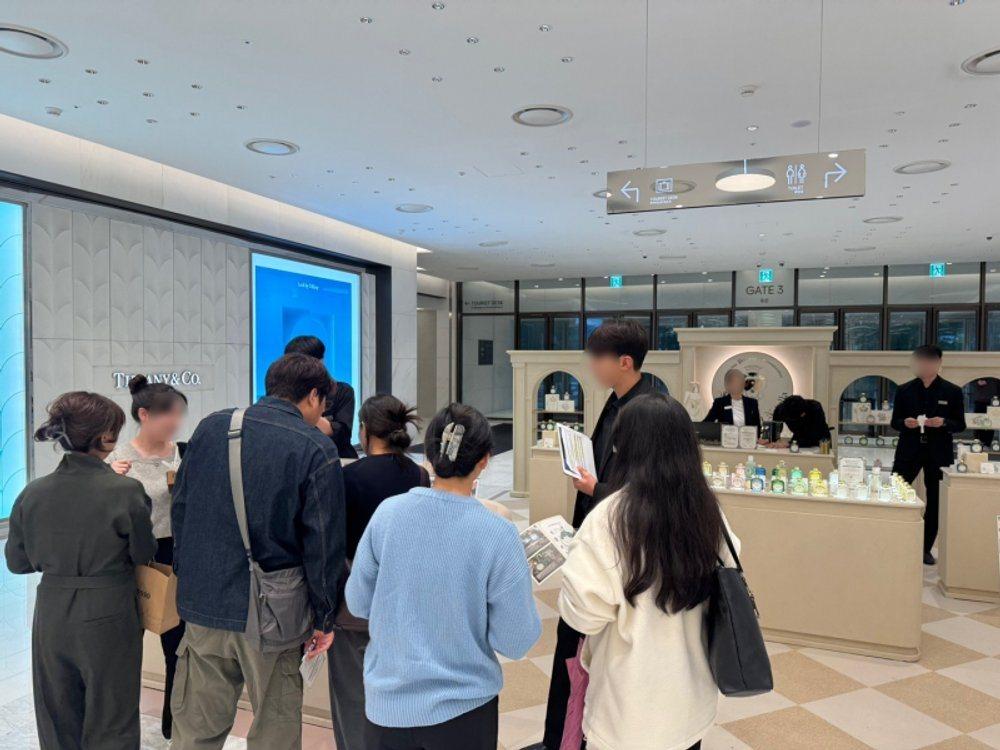
They go in having already learned the brand history, the product lineup, and answers to frequently asked questions. This has to be finished in the briefing before the pop-up opens; if they learn it on the floor while serving visitors, it shows. Tone and manner also differ from brand to brand, so it is better to prepare a separate manual.
What an event promoter handles
Organizing the queue, coordinating the order of the experience zones, and helping run the photo area all fall here. At busy times, without this role, the docent ends up stopping mid-explanation to go sort out the line. Then service keeps getting cut off.
How we staffed the Santa Maria Novella pop-up
Our part in this pop-up was event operations, and we split the on-site staff into two lines: explanation and operations. Visitors asking about the brand story or the product lineup were taken by promoters in the docent role, while event promoters looked after the experience order and visitor flow. With only six days, there was no room to change the structure midway, and because we split it from the start, the flow of service held steady.
How staffing and shifts are decided
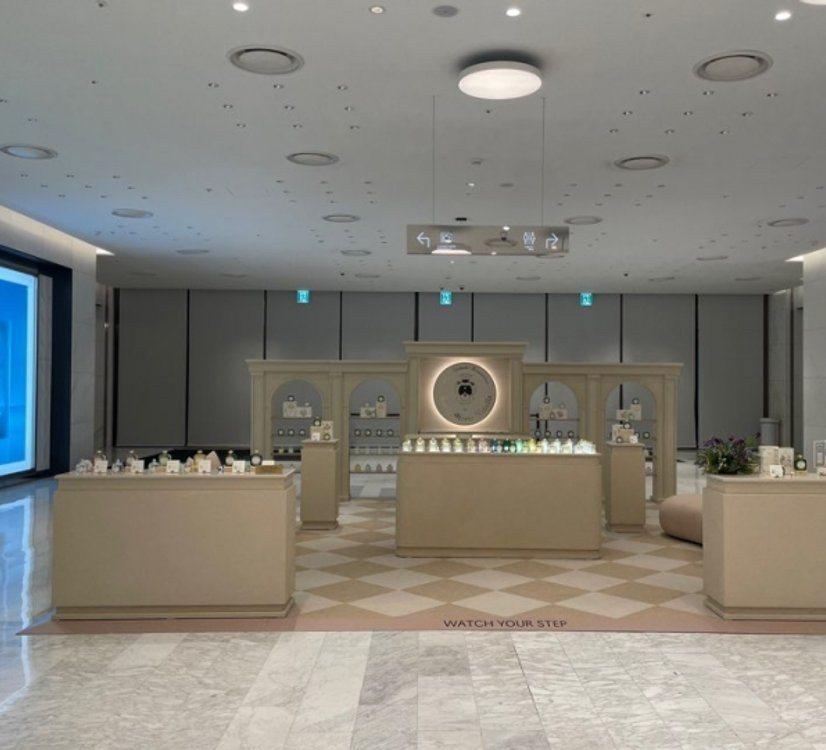
We first check how visitor numbers vary by day and the extended opening hours, then build the shift schedule around them. This Santa Maria Novella pop-up ran from 10:30 a.m. to 8 p.m., and until 8:30 p.m. on Fridays, Saturdays, and Sundays, so staff had to be split into shifts even within a single day. When one person stays from opening to close, you can see service quality drop as the afternoon goes on.
The rule when timing shifts is to never leave the busiest hours uncovered. It is safer to adjust in advance so that shift changes don't fall in periods when foot traffic rises, such as right after lunch or during the extended evening hours.
How handovers work at shift change
Handovers happen within the same role. A docent hands over to the next docent, an operations promoter to the next operations promoter. The moment a docent leaves the post saying to an operations promoter, “Can you cover the explanations?”, the role split described above falls apart.
Three things are enough to pass on: the questions that came up often today, the current queue at the experience zone, and what remains in the run order. The rule is to hand these over verbally before leaving, and if you overlap the shift times by about five minutes, this conversation fits in naturally.
How far to standardize the service script
Information that must not be wrong is standardized sentence by sentence; conversation is left to discretion. Content that has to be the same no matter who says it — the brand introduction, the product lineup, the event dates, and the experience order — we write into the manual word for word. If each docent says it differently, visitors compare it with what the person next to them heard, and trust breaks.
On the other hand, if you also script the conversation where staff ask what a visitor is looking for and suggest a matching product range, the service starts to sound mechanical. For this part, it is better to align only tone and manner in the briefing and leave the wording to each person. Explanations of product efficacy or ingredients, though, are kept strictly within the materials the brand provided.
Role split: what to confirm before signing
When you hand event operations to an agency, it helps to agree in advance how many docents and operations promoters there will be and on what basis they are divided. If the brand sets only the headcount and leaves the role split to the floor, there will be confusion on opening day. This is also the stage to decide when and by whom the briefing materials and manual will be shared.
If you are thinking through staffing for a department store pop-up or how to place docents and promoters, feel free to get in touch. You can read more about the event operations for the Santa Maria Novella pop-up store on the original page below. https://www.tlcreative.co.kr/projects/hyundai-seoul-santa-maria-31